Can a crown really be designed, made and fitted in a single visit, and is that right for your tooth?
In this article:
- What are same-day dental crowns?
- Who is suitable for a same-day crown?
- How does the same-day crown process work?
- What happens during a same-day crown appointment?
- What affects the cost of a same-day crown?
- How should you care for a new crown?
- Where can Roodepoort patients book a same-day crown?
What are same-day dental crowns?
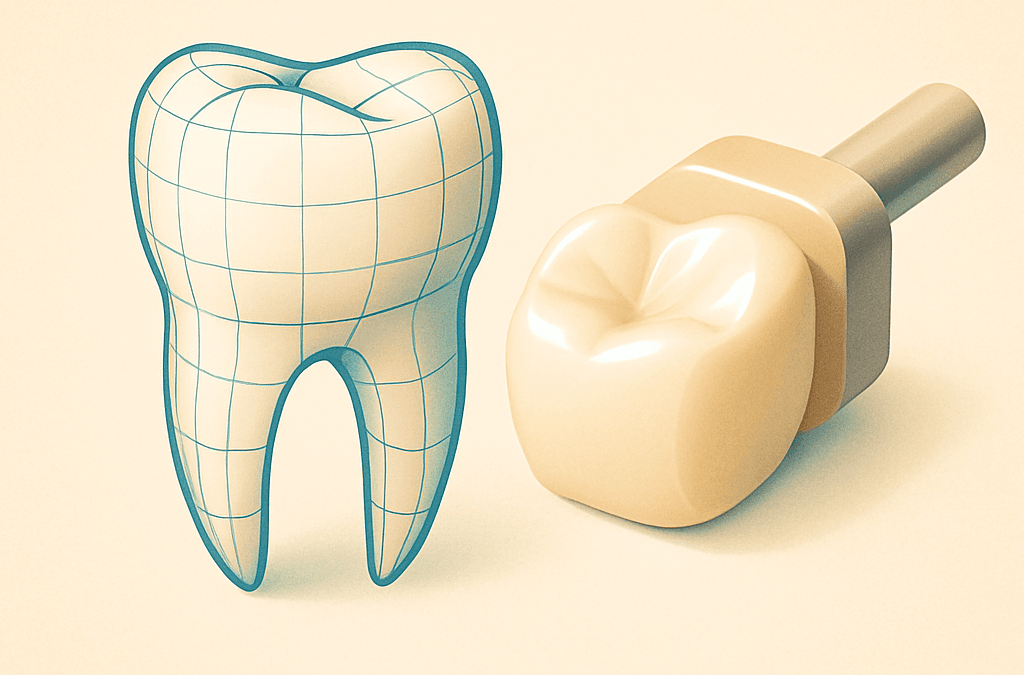
A dental crown is a custom-made covering that fits over a tooth to restore its shape, strength and appearance. It may be considered when a tooth is cracked, heavily worn, weakened by a large filling or treated with a root canal. A crown covers the visible part of the tooth above the gum line; it does not replace the root.
At Dr Chalita le Roux Inc. in Roodepoort, CEREC technology can be used to design and mill certain ceramic crowns in the practice. Instead of sending a conventional impression to an external laboratory and arranging a later fitting, the tooth can be digitally scanned and the crown made during the appointment. The dentist checks the fit, bite and appearance before bonding it in place. This can avoid a separate visit and, when appropriate, a temporary crown.
Same-day treatment is not suitable for every tooth or every clinical situation. The material and design options, amount of tooth remaining, gum health, bite forces and any need for additional treatment all matter. A consultation and examination help determine whether a CEREC crown is appropriate or whether another restoration or a laboratory-made crown would be more suitable. The dentist can explain the proposed plan and provide an estimate before treatment begins.
Who is suitable for a same-day crown?
A same-day crown may be considered when a tooth needs full coverage and there is enough healthy tooth structure to support a restoration. Common reasons include a large or failing filling, a fracture that has not extended too far below the gum, significant wear, or a tooth that has had root-canal treatment. Suitability depends on examination and, when indicated, dental X-rays.
The dentist will assess the tooth’s remaining structure, the condition of the nerve and root, gum health, the bite and how much pressure the tooth takes when chewing. A tooth with active infection, extensive decay below the gum line or too little structure to retain a crown may need other treatment first. The dentist may also recommend a laboratory-made restoration if the required design or material is not suitable for in-practice milling. Grinding or clenching can affect the plan and may call for protective measures.
At Dr Chalita le Roux Inc., the decision is made after a consultation rather than from a photograph or symptom alone. If a CEREC crown is not appropriate, the dentist can discuss alternatives and explain the sequence of care. The aim is to choose a restoration that suits the tooth’s condition and your needs, rather than to fit every case into a single-visit approach.
Not sure whether your tooth needs a crown or a filling? You can WhatsApp the practice on 083 710 9131 or call 071 884 3204 and an examination will give you a specific answer rather than a general one.
How does the same-day crown process work?
The process begins with an assessment of the tooth, gums and bite. The dentist discusses the problem, checks whether a crown is indicated and may take X-rays if they are needed to evaluate the tooth and its roots. If a CEREC crown is suitable, the plan, material and estimate are discussed before preparation.
The tooth is shaped so the crown can fit over it, while preserving sound tooth structure where possible. A digital scanner records the prepared tooth and nearby teeth, creating a three-dimensional image rather than relying on a conventional impression. The dentist uses the scan to design the crown, checking its contours and contact with neighbouring teeth. A milling unit then shapes the restoration from a ceramic block. The dentist may refine and polish it, then check its fit, colour and bite in the mouth.
When the crown is ready and the tooth is suitable for bonding, it is secured using dental cement or adhesive. The dentist removes excess material and checks your bite. If the tooth needs additional care, the scan or milling process cannot produce a suitable restoration, or the fit is not satisfactory, treatment may need to be staged or another type of crown considered. The length of the appointment depends on the clinical work required and the individual case.
What happens during a same-day crown appointment?
Your appointment starts with a discussion of your symptoms, dental history and what you hope to address. Dr Chalita le Roux examines the tooth and surrounding gums, assesses your bite and may recommend X-rays. If a crown is appropriate, the treatment plan and estimate are explained. You can ask questions before deciding whether to proceed.
For the procedure, local anaesthetic is used when needed to keep you comfortable. The dentist removes decay or old filling material, then shapes the tooth to make room for the crown. A digital scan captures the prepared tooth and its neighbours. While the crown is designed and milled, you may need to remain at the practice; the exact waiting time varies. The dentist then tries in the crown, adjusts the fit and bite if required, and bonds it in place when the result is suitable.
There may be a short period of sensitivity after treatment, and the dentist will explain what to expect and how to care for the tooth. Some cases need additional treatment or a different restoration, so a same-day crown cannot be assumed before an examination. Dr Chalita le Roux Inc. is at Unit 2, Amorosa Office Park, Corner of Doreen Road and Lawrence Road, Amorosa, Roodepoort. Appointments are available Monday to Friday, 08:00 to 17:00.
What affects the cost of a same-day crown?
The cost of a same-day crown depends on more than the milling process. Factors include which tooth is being treated, how much preparation it needs, the condition of the tooth and gums, the ceramic material and design required, and whether additional care is needed before the crown can be placed. An examination and any appropriate imaging help establish what treatment is indicated.
If decay, an old restoration or a crack needs attention, that work may affect the overall treatment plan. A tooth that needs root-canal treatment, gum care or a different type of restoration may involve separate steps. The dentist can explain which items are included in the proposed plan and provide an estimate before treatment starts. In broad terms, dental treatment costs can be thought of in tiers from $ to $$$$, but a tier is not a personalised quote.
Dr Chalita le Roux Inc. provides a detailed practice statement which you submit to your scheme for reimbursement directly. Reimbursement depends on your scheme’s rules and benefits, so check with your provider about cover for crowns and related treatment. The practice does not bill medical aid directly. A consultation is the practical way to discuss the condition of your tooth, the available options and the expected cost for your case.
How should you care for a new crown?
Care for a crowned tooth much like your other teeth: brush twice daily with fluoride toothpaste and clean between the teeth each day. Pay particular attention to the gum line around the crown, where plaque can collect. A crown covers the visible tooth but does not prevent decay at its edge or protect the surrounding gums from disease.
For the first day or so, follow the dentist’s instructions about eating and drinking, especially if your mouth is still numb or the tooth feels sensitive. Once comfortable, avoid using the crown to bite very hard objects, and do not chew ice or open packaging with your teeth. If you clench or grind, tell the dentist; a protective night guard may be discussed if suitable. Attend routine dental check-ups so the crown, bite and surrounding tissues can be monitored.
Some brief sensitivity can occur after preparation, but contact the practice during business hours if pain persists, your bite feels uneven, the crown feels loose, or the gum becomes swollen. Do not try to adjust or glue a crown yourself. If it comes off, keep it safe and contact the dentist for advice. The practice is open Monday to Friday, 08:00 to 17:00, and is closed on weekends and South African public holidays.
Where can Roodepoort patients book a same-day crown?
Roodepoort patients can enquire about CEREC same-day crowns at Dr Chalita le Roux Inc., located at Unit 2, Amorosa Office Park, Corner of Doreen Road and Lawrence Road, Amorosa, Roodepoort, 2040, South Africa. The practice offers general dentistry and CEREC same-day crowns, but an examination is needed to confirm whether this treatment suits your tooth.
To ask about an appointment, call 071 884 3204 or the landline on 011 568 8285. The practice is open Monday to Friday, 08:00 to 17:00, and closed on weekends and South African public holidays. Free on-site parking is available. Care is provided in English and Afrikaans.
Dr Chalita le Roux’s credentials are BChD cum laude (UP 2020), HPCSA DP 0118702, SAAAD member. A consultation can cover the tooth’s condition, whether digital scanning and in-practice milling are appropriate, the likely appointment plan and an estimate. If a same-day crown is not suitable, the dentist can discuss other restorative options. For directions, use the practice map.
How crowns are made here
Most ceramic crowns at the practice are made with CEREC: the prepared tooth is scanned with a digital impression instead of a putty tray, the crown is designed on screen while you wait, milled from a ceramic block in the practice and fitted the same day. A tooth that needs a root canal or a build-up first is treated in the right order and the crown follows. Where a laboratory-made crown is the better choice, that is explained and planned in writing.
Dr Chalita le Roux is BChD cum laude (University of Pretoria, 2020), HPCSA-registered (DP 0118702), and a member of the South African Academy of Aesthetic Dentistry. The practice is in Amorosa, Roodepoort, with free on-site parking.
Frequently asked questions
Can a dental crown really be made in one visit?
Yes, some crowns can be designed and milled in the practice during one appointment using CEREC digital technology. The tooth is prepared and scanned, then the crown is designed, made and checked before bonding. Whether this can be completed in one visit depends on the tooth’s condition, the design needed and whether additional treatment is required. An examination is needed to confirm suitability; some cases call for a laboratory-made crown or treatment in stages.How do CEREC same-day crowns work?
CEREC uses a digital scan of the prepared tooth to create a three-dimensional image. The dentist designs a crown to fit that tooth and its neighbours, and an in-practice milling unit shapes the restoration from ceramic. The dentist then checks its fit and bite and bonds it in place when suitable. Scanning and milling can reduce the need for a separate laboratory visit, although the treatment plan depends on the tooth and the restoration required.Who is suitable for a same-day crown?
A same-day crown may suit someone who needs full coverage for a weakened, worn or significantly restored tooth, provided the tooth and gums can support it and the design is suitable for CEREC milling. The dentist assesses remaining tooth structure, decay, root health, gum condition and bite forces. Infection, extensive damage or a need for other treatment may change the plan. A consultation and, when indicated, X-rays are needed before deciding.How long does a same-day crown appointment take?
The appointment can take several hours because it may include examination, tooth preparation, digital scanning, crown design and milling, and final fit and bite checks. The time varies with the tooth, the amount of preparation needed and whether additional care is required. Ask the practice when booking how much time to allow for your consultation or planned treatment. A same-day crown is not appropriate or achievable in every case.Are same-day crowns as strong as traditional crowns?
Strength depends on the crown material and design, the tooth beneath it, how it is fitted and the forces placed on it when chewing. CEREC crowns are made from ceramic, but no crown is suitable for every tooth or bite. The dentist considers the location of the tooth, remaining structure and habits such as clenching before recommending a restoration. Good daily cleaning and routine dental reviews help monitor the crown and the tooth around it.How much do same-day crowns cost in South Africa?
The cost varies with the tooth, the ceramic and design required, and whether work such as treating decay is needed first. At Dr Chalita le Roux Inc., the dentist can assess your tooth and provide an estimate before treatment. Broad dental-cost tiers can be described as $, $$, $$$ or $$$$, but these are not a personalised quote. The practice provides a detailed practice statement which you submit to your scheme for reimbursement directly.Do you need a temporary crown with a same-day crown?
When a suitable CEREC crown is designed, milled and fitted in the same appointment, a temporary crown may not be needed. If the tooth needs more treatment, the final restoration cannot be made or fitted during that visit, or a laboratory-made crown is more appropriate, a temporary restoration may be used while you wait. The dentist will explain what to expect based on the tooth and treatment plan.What happens if my tooth is not suitable for a same-day crown?
The dentist will explain why a CEREC crown is not suitable and discuss options based on the tooth’s condition. These may include treating decay or infection first, a different type of crown, another restoration or referral if specialised care is needed. The recommended plan depends on examination findings and any necessary X-rays. You can ask about the stages, expected appointment timing and estimate before deciding how to proceed.Book a consultation about a dental crown
If you have a cracked, worn or heavily filled tooth and want to know whether a crown is the answer, you can WhatsApp the practice on 083 710 9131, call 071 884 3204, or email info@drchalitaleroux.co.za. We respond within two business days, Monday to Friday 08:00 to 17:00.
Related reading on our site: Dental crowns · CEREC same-day crowns · Veneers compared with crowns
Last verified: November 2026. This article is general information for patients and is not clinical advice; it does not replace an examination of your own teeth. Written by Dr Chalita le Roux, BChD cum laude (University of Pretoria, 2020), HPCSA DP 0118702, member of the South African Academy of Aesthetic Dentistry.