If you are searching for root canal treatment in Roodepoort, you likely have tooth pain or an infection and want to know if the tooth can be saved. At Dr Chalita le Roux Inc in Amorosa, Roodepoort, we provide modern endodontic (root canal) treatment to clean the infection inside the tooth, relieve pain and help you keep your natural tooth where possible.
- A root canal is a treatment that cleans infection inside a tooth so it can be saved instead of removed.
- It is suited to teeth with deep decay, cracks or trauma that have reached the nerve and caused inflammation or infection.
- The procedure is done under local anaesthetic, using fine instruments and X‑rays to clean, disinfect and seal the tooth.
- Cost depends on which tooth is treated, how complex the roots are and whether a crown is needed afterwards ($–$$$ tiers).
- We confirm if you need a root canal and give a personalised written estimate after a full in-person consultation.
What is a root canal and why might I need one?
A root canal, also called endodontic treatment, is a procedure that treats an infection or irreversible inflammation at the centre of a tooth, where the nerve and blood supply sit inside fine root canals. When bacteria reach this space through deep decay, cracks, old fillings or trauma, the nerve tissue can become inflamed or die, causing pain, sensitivity or swelling.
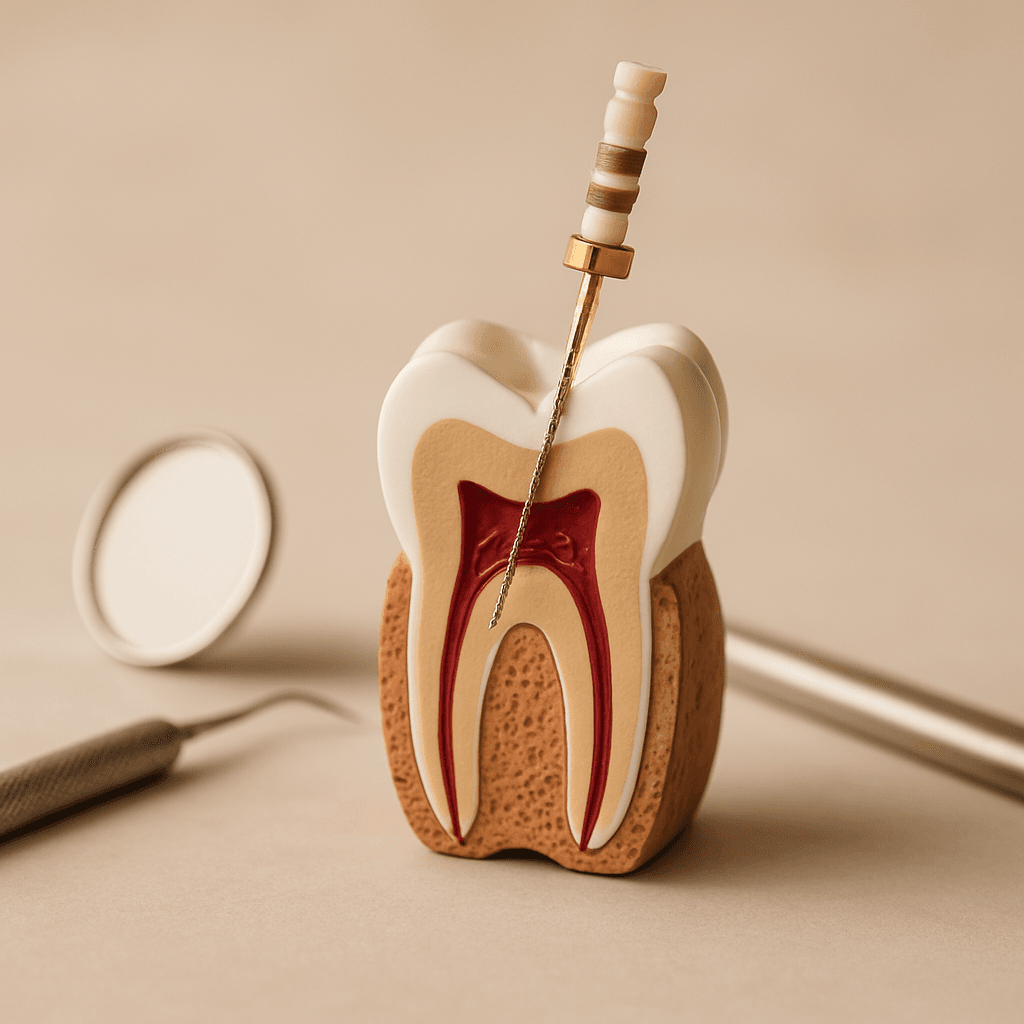
During a root canal, the diseased tissue is removed from inside the tooth, the canals are carefully cleaned and disinfected, and then sealed to reduce the chance of reinfection. This allows the tooth to be preserved instead of extracted, so you can continue to chew comfortably and maintain the natural spacing and appearance of your smile. Whether a root canal is the right option for you is assessed in person after a clinical examination and X-rays.
Who is a good candidate for root canal treatment in Roodepoort?
Root canal treatment is typically recommended for patients who have deep decay, a cracked tooth, a large broken filling or trauma that has reached the nerve, causing ongoing pain, prolonged sensitivity to hot or cold, or swelling of the gum near the tooth. It may also be advised when a darkened tooth or a draining sinus suggests a long-standing infection inside the root.
Not every painful tooth automatically needs a root canal. Some can settle with a simpler filling or other conservative care, while others may be too damaged to restore predictably. At Dr Chalita le Roux Inc in Amorosa, Roodepoort, we first carry out a detailed examination with digital X-rays, test the tooth’s response and discuss your symptoms. Based on these findings, we explain whether a root canal, an alternative treatment or removal is the right option for you, and you make an informed decision together with Dr le Roux.
What happens during a root canal appointment at Dr Chalita le Roux Inc?
Your visit in Roodepoort starts with a consultation, where Dr Chalita le Roux reviews your medical and dental history, listens to your symptoms and examines the tooth and surrounding tissues. X-rays are taken to show the roots, detect hidden decay and identify any infection at the tip of the root. Only once the diagnosis is clear do we talk you through the recommended treatment steps, expected outcomes and alternatives.
For the root canal itself, local anaesthetic is used to numb the tooth and surrounding area. A small opening is made in the tooth to access the root canals, which are then measured, cleaned and shaped with fine instruments and disinfecting solutions. Once the canals are cleaned, they are filled with a biocompatible material and sealed. In many cases, a temporary restoration is placed and the tooth later receives a stronger filling or crown to protect it. Every stage, including how many visits you might need, is confirmed case by case after your in-person assessment.
What are the risks, benefits and possible alternatives to a root canal?
The main benefit of a root canal is keeping your own tooth in function, which helps maintain chewing efficiency, comfort and the natural look of your smile without creating a gap. It also removes the source of infection, which can reduce pain, swelling and the risk of the infection spreading. Many patients find that once healing is complete and the tooth is properly restored, they can use it much like their other teeth.
As with any dental procedure, there are risks. These can include persistent or recurrent infection, fracture of the tooth if it is not adequately protected, or limited access to very curved or narrow canals that makes complete cleaning difficult. In some cases, a root canal may not be suitable, and removal of the tooth with replacement options such as a bridge, implant or partial denture may be discussed. Dr le Roux will explain the benefits, risks and alternatives clearly at your consultation in Roodepoort, so you can choose the option that fits your health, expectations and budget.
How much does root canal treatment cost and what affects the price?
Root canal cost in Roodepoort is driven by several clinical factors rather than a fixed fee. Front teeth generally have simpler root anatomy and are usually in the lower cost tier ($), while premolars and molars often have more canals and complex shapes, placing them in a moderate to higher tier ($$–$$$). The number of visits needed, any additional X-rays or imaging, and whether a fibre post or crown is recommended for long-term protection also influence the overall cost.
The materials used, the need for laboratory work to fabricate a crown, and how compromised the tooth is to start with will further impact the fee. In many cases, saving a tooth with a root canal and crown can be a worthwhile long-term investment in your oral health, particularly compared with the cost and complexity of replacing an extracted tooth later. At Dr Chalita le Roux Inc, an exact, personalised estimate is given after the consultation, in writing, before any treatment starts.
What does a typical root canal visit in Roodepoort involve compared with a follow-up restoration?
| Aspect of the visit | Root canal visit | Follow-up restoration visit |
|---|---|---|
| Main purpose | Diagnose and clean infection inside the tooth, then seal the canals. | Rebuild and strengthen the tooth with a filling or crown after the canals are sealed. |
| Initial assessment | Full examination, history and X-rays focused on the painful or infected tooth. | Brief check of healing, review of symptoms and confirmation the tooth is ready to be restored. |
| Anaesthetic use | Local anaesthetic to numb the tooth and allow careful work inside the root canals. | Local anaesthetic if needed to prepare the tooth for a filling or crown comfortably. |
| Procedures performed | Access opening, canal cleaning, disinfection and filling of the canals with sealing material. | Shaping the tooth, taking impressions if a crown is planned, and placing the final restoration. |
| Time in the chair | Often longer, as cleaning and shaping canals is detailed work that must be done carefully. | Usually shorter, focused on preparing and restoring the tooth surface above the gums. |
| After-visit sensations | Mild tenderness or biting sensitivity for a few days as tissues settle around the treated tooth. | Minor sensitivity around the new filling or crown as you adapt to the restored bite. |
Related pages
Root Canal · General Dentistry · Contact Us
Nearby and related treatments
Root Canal in Ruimsig, Roodepoort · Root Canal in Wilgeheuwel, Roodepoort · Root Canal in Weltevreden Park, Roodepoort · What Do Root Canal Cost in Roodepoort?
Frequently asked questions
Is root canal treatment painful?
Root canal treatment is carried out under local anaesthetic, so the tooth and surrounding area are numbed during the procedure. You may feel some pressure or vibration from the instruments but not sharp pain. After the appointment, the tooth can be tender or sensitive for a few days, especially when chewing, and this is usually manageable with routine pain relief. Any concerns about discomfort are discussed at your consultation so we can plan appropriately.
How long does a root canal take from start to finish?
The duration depends on the tooth and how complex the root canals are. A front tooth with a single canal generally takes less time than a molar with multiple curved canals, and some teeth can be completed in one visit while others need two or more visits for thorough cleaning and sealing. At your assessment in Roodepoort, Dr le Roux will map out how many appointments you are likely to need and give you an approximate timeline before treatment begins.
Will I need a crown after my root canal?
Many teeth that require a root canal have already lost significant structure from decay, cracks or large fillings, which can make them more fragile. In these cases, a crown or similar protective restoration is often recommended to reduce the risk of fracture and to restore function and aesthetics. Some front teeth with minimal damage may be managed with a high-quality filling instead. The decision is made after we evaluate the remaining tooth structure during your consultation.
What are the signs that I might need a root canal?
Common signs include severe or lingering toothache, sensitivity to hot or cold that persists after the source is removed, swelling or tenderness in the gum near the tooth, and sometimes a pimple-like spot that drains fluid. A tooth that has darkened over time or pain when biting can also indicate nerve damage or infection. However, symptoms vary and some infected teeth feel almost normal, so proper diagnosis with an examination and X-rays in Roodepoort is essential.
Can a root canal fail and what happens then?
In some cases, infection can persist or return if bacteria remain in hidden canals, if new decay develops, or if the tooth cracks. When this happens, options may include re-treatment of the root canal, minor surgical endodontic procedures or removal of the tooth, depending on the situation. We assess each case individually with updated X-rays and clinical tests, then explain the likely causes, prognosis and available solutions so you can choose the right option for your circumstances.
How should I care for my tooth after a root canal?
After a root canal, it is important to avoid chewing hard foods on the treated tooth until a final restoration, such as a crown or durable filling, is placed. Keeping the area clean with gentle brushing and flossing helps healing, and using any prescribed medication as directed supports comfort. If you notice increasing pain, swelling or a new chip, contact the practice promptly. Ongoing regular check-ups in Roodepoort allow us to monitor the tooth and surrounding tissues over time.
Is it better to remove the tooth instead of having a root canal?
Extraction may seem simpler initially, but it leaves a gap that can affect chewing, appearance and the position of neighbouring teeth. Replacing a missing tooth later with a bridge, implant or partial denture can be more involved. Root canal treatment aims to preserve your natural tooth when it is structurally suitable to do so. At your consultation, Dr le Roux will compare the pros and cons of saving the tooth versus removing and replacing it, so you can decide on the right approach.
How do I book a root canal consultation in Roodepoort?
To book, you simply contact Dr Chalita le Roux Inc at Unit 2 Amorosa Office Park in Roodepoort during normal weekday office hours. We will schedule a consultation where Dr le Roux takes your history, examines your mouth and performs any necessary X-rays to diagnose the problem tooth. After discussing the findings, you receive a clear written estimate and treatment plan for any recommended root canal or alternative care, before you decide to proceed.
Book a consultation
To discuss root canal roodepoort with Dr Chalita le Roux, WhatsApp us on 083 710 9131, call 071 884 3204, or send us a message. We are in Amorosa, Roodepoort, open Monday to Friday, 08:00 to 17:00, with free on-site parking.
Written and clinically reviewed by Dr Chalita le Roux, BChD cum laude (University of Pretoria, 2020), HPCSA DP 0118702, member of the South African Academy of Aesthetic Dentistry. In private practice in Roodepoort since 2022.
This page is general information, not a diagnosis or treatment plan. What is right for your teeth is decided at a consultation with a registered dental practitioner.
- Tooth extraction in Roodepoort
- Children’s dentist in Roodepoort
- Full mouth rehabilitation in Roodepoort
- Broken or chipped tooth repair
- Dentist in Discovery, Roodepoort
- Dentist in Witpoortjie, Roodepoort
- Dentist in Princess, Roodepoort
- Dr Chalita le Roux — Roodepoort dentist
- Emergency dentist in Roodepoort
- Emergency dentist for Krugersdorp
- Dentist in Roodepoort
- Areas we serve from Roodepoort
- About Dr Chalita le Roux
- Contact & booking