If you are missing teeth, the choice between dentures and dental implants can feel overwhelming. Both options can restore your smile and chewing, but they differ in how they are made, how they feel, the treatment process and long‑term costs. At Dr Chalita le Roux Inc in Amorosa, Roodepoort, we assess all of this in person and guide you to the option that fits your mouth, lifestyle and budget.
- Dentures are removable tooth replacements, while dental implants are fixed, surgically placed replacements.
- Dental implants usually feel more like natural teeth, but they require surgery and good jawbone health.
- Dentures offer a non‑surgical, lower‑upfront‑cost ($) option that can replace many teeth at once.
- Implants are typically a higher‑upfront‑cost ($$$) option that can offer longer‑term stability and comfort.
- The right option depends on your oral health, number of missing teeth, expectations and budget, which we assess during a consultation.
What exactly are dentures and dental implants?
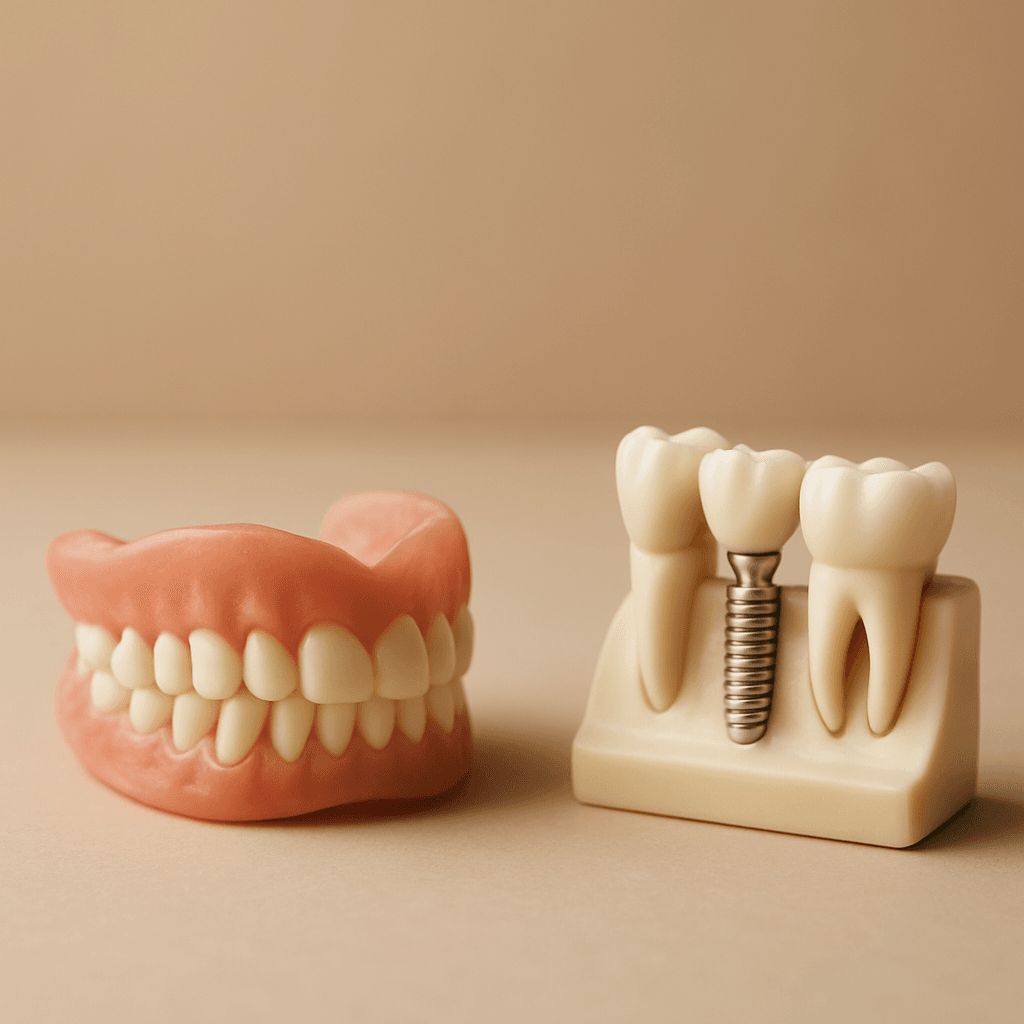
Dentures are custom‑made, removable prosthetic teeth attached to a gum‑coloured base that sits on your gums. They can replace several missing teeth (partial dentures) or a full arch when all teeth are missing (complete dentures). They help you chew, speak and smile again, and can be taken out for cleaning and at night.
Dental implants are fixed tooth replacements. A small titanium post is placed into the jawbone where the tooth is missing and acts as an artificial root. Once this has healed, a connector and a custom crown or bridge are attached. The result is a tooth or set of teeth that are anchored in the bone and designed to function and feel closer to natural teeth.
Both dentures and implants are widely used and well‑established. The main difference is that dentures sit on the gums and are removable, while implants are surgically placed in the bone and are not removed by the patient.
Who is a good candidate for dentures vs dental implants?
Dentures suit many patients, especially those who have lost several or all teeth, or whose remaining teeth are not strong enough to support fixed options. They are often chosen when jawbone has shrunk or when a patient prefers a non‑surgical approach. Partial dentures can work well when some natural teeth remain, while full dentures are used when a whole arch needs replacement.
Dental implants are usually suited to patients with healthy gums, adequate jawbone and a commitment to good oral hygiene. They can replace a single tooth, several teeth or support bridges or implant‑supported dentures when multiple teeth are missing. Implants may not be appropriate if there is uncontrolled gum disease, certain medical conditions, heavy smoking or insufficient bone without further procedures.
At Dr Chalita le Roux Inc in Amorosa, Roodepoort, we assess your teeth, gums, bone levels, medical history and expectations during your consultation. Based on this, we explain which options are clinically realistic for you and discuss the pros and cons of dentures and implants in your specific case.
What is the treatment process for dentures compared with dental implants?
Dentures are typically made over several visits. After examining your mouth, we take detailed impressions and sometimes scans. These are sent to a dental laboratory to craft a custom denture. There may be a trial stage where we check the fit, bite and appearance before the final denture is made. If teeth must be removed first, those extractions are planned and, in some cases, an immediate denture is made to wear while healing.
Dental implant treatment generally involves more steps and time. First, we perform a full assessment, including X‑rays or scans, to plan the placement. The implant post is then placed into the jawbone in a minor surgical procedure. After a healing period, during which the implant fuses with the bone (osseointegration), a connector and crown, bridge or implant‑supported denture are attached. Additional procedures like bone grafting may be needed in some cases.
We go through the entire treatment roadmap in person so you understand how many appointments are involved, how long healing might take, and how each stage fits into your schedule. Every treatment plan is written up after your consultation so you can review it at home before deciding.
How do dentures and dental implants feel, and what are the risks?
Modern dentures can look very natural, but they may feel different from natural teeth. Some patients notice movement, pressure spots or changes in speech at first, and the fit can change over time as the jawbone and gums remodel. This may require adjustments, relining or, after years, replacement. Common risks include sore spots, difficulty with certain foods and, occasionally, breakage if dropped.
Dental implants are designed to feel closer to natural teeth because they are fixed in the bone. Many patients find chewing and speaking easier once they are fully restored. However, implants involve surgery, with typical surgical risks such as infection, delayed healing, or failure of the implant to integrate with the bone. Implants can also be affected by gum inflammation around the implant (peri‑implant disease) if plaque is not controlled.
In Roodepoort, we take time during your consultation to explain these potential risks and how they relate to your health and habits. We also discuss how regular check‑ups, professional cleaning and good home care can reduce problems and help both dentures and implants last longer.
How does the cost of dentures compare with dental implants in South Africa?
Cost is often a key factor when weighing dentures against dental implants. In general, dentures tend to have a lower upfront cost tier ($) because they do not involve surgical placement in the bone and can replace many teeth with a single appliance. Their cost is driven by factors such as the type of denture (partial vs full), the materials used, the complexity of the bite, and any extractions or preparatory treatments.
Dental implants typically fall into a higher upfront cost tier ($$$). This is because each implant involves surgical placement, possible scans and planning, high‑precision components and laboratory work for the crown, bridge or implant‑supported denture. The overall cost is influenced by how many teeth are replaced, whether bone grafting or other procedures are needed, and the materials chosen for the final restorations.
Some patients choose a combined approach, such as an implant‑supported denture, which can sit in a moderate‑to‑higher tier ($$–$$$) depending on the number of implants and the design. During your consultation at Dr Chalita le Roux Inc in Amorosa, Roodepoort, we discuss these tiers clearly and look at how long each option is likely to last in your mouth.
An exact, personalised estimate is given after the consultation, in writing, before any treatment starts.
Comparing dentures and dental implants at a glance
| Dentures | Dental implants | |
|---|---|---|
| What they are | Removable prosthetic teeth on a gum‑coloured base that sit on the gums | Fixed titanium posts in the jawbone supporting crowns, bridges or implant‑supported dentures |
| Treatment process | Non‑surgical; impressions, lab work, try‑ins and adjustments; may follow extractions | Surgical placement of implants, healing period, then attachment of crowns/bridges or implant‑supported dentures |
| Feel and function | Can restore appearance and chewing but may move slightly and need time to get used to | Designed to feel closer to natural teeth, with firm biting and stable speech once healed |
| Upfront cost tier | $ (lower upfront cost for replacing many teeth at once) | $$$ (higher upfront cost per area treated due to surgery and lab components) |
| Maintenance | Removed for cleaning; may need periodic adjustments, relines or replacement as gums and bone change | Cleaned like natural teeth with brushing and flossing; requires regular check‑ups to monitor gums and bone |
| Suitability | Often suited to patients with multiple missing teeth, limited bone or who prefer a non‑surgical option | Suited to patients with healthy gums, adequate bone and willingness to undergo surgery and maintain excellent hygiene |
| Longevity considerations | May need modifications or replacement over time as fit changes | Can last many years with good care, but depend on healthy bone and gums |
| Appearance | Modern materials can look natural; edges and bulk may be noticeable at first | Individual crowns or bridges can closely mimic natural teeth in shape and colour |
Related pages
Implants · General Dentistry · Contact Us
Nearby and related treatments
All On 4 Dental Implants in Poortview, Roodepoort · Cost Of Tooth Implant In South Africa · Dental Implants Vs Dentures: Which Is Right for You? · Types Of Dental Implants Cost
Frequently asked questions
Are dentures or dental implants more appropriate for me personally?
This depends on how many teeth are missing, the health of your gums and jawbone, your general health, and what you expect in terms of feel, appearance and maintenance. Some patients are better suited to dentures, others to implants, and some benefit from a combination, such as implant‑supported dentures. At your consultation in Amorosa, Roodepoort, we examine your mouth, discuss your goals and calmly explain which options make clinical and practical sense for you.
Do dental implants hurt more than getting dentures?
Dental implant placement is a minor surgical procedure, so you can expect some post‑operative discomfort, swelling or bruising as the area heals. This is different from the non‑surgical denture process, which mostly involves impressions and fittings, though extractions can also cause temporary soreness. We discuss pain control, healing times and what you can realistically expect from each option during your consultation, and provide tailored instructions to help you stay as comfortable as possible during recovery.
Can I switch from dentures to dental implants later on?
In many cases, yes. Patients who have worn dentures for years sometimes move to implants or implant‑supported dentures for improved stability and chewing. However, long‑term denture use can reduce jawbone volume, which may affect implant planning and could require additional procedures. At Dr Chalita le Roux Inc in Roodepoort we assess your bone levels with X‑rays or scans, explain what is possible and outline any preparatory treatment needed before moving from dentures to implants.
How do I clean dentures compared with dental implants?
Dentures are removed for cleaning. They should be brushed gently with a soft brush and non‑abrasive cleanser, and rinsed well. Your gums, tongue and any remaining teeth also need daily cleaning. Dental implants, once restored with crowns or bridges, are cleaned much like natural teeth: thorough brushing, flossing or interdental cleaning, and regular professional check‑ups. During your visit we demonstrate the exact cleaning routine for your chosen option and provide written instructions to follow at home.
Will people notice that I am wearing dentures or dental implants?
Modern dentures and implant restorations are designed to look natural, with careful attention to tooth shape, colour and the way they support your lips and cheeks. Dentures may have a slight difference in bulk or edge profile compared with natural teeth, especially during the initial adjustment period. Implants with custom crowns often blend very well with neighbouring teeth. At your consultation we discuss your aesthetic expectations carefully and, where appropriate, show you how different solutions may look in your smile.
How long does treatment take for dentures versus dental implants?
Dentures can often be completed over a few visits once any extractions or gum treatments are done, although complex cases may take longer to fine‑tune the fit. Dental implants generally require more time because the implant must integrate with the bone before the final teeth are attached. Healing periods differ from patient to patient. In Roodepoort we provide a personalised timeline after your assessment so you understand the expected duration for dentures, implants or a combination solution.
Are dental implants safe if I have health conditions?
Many patients with medical conditions can safely receive dental implants, but certain issues such as uncontrolled diabetes, blood‑thinning medication, smoking or previous radiation therapy can affect healing. These factors need careful evaluation and coordination with your medical team. Dentures may sometimes be preferred when surgical risks are higher. During your consultation, we take a full medical history, review any medications and explain which tooth replacement options are safest and most predictable for you.
How do I decide between a full denture and multiple dental implants?
The choice between a full denture and multiple implants involves weighing comfort, chewing strength, appearance, treatment time, surgical considerations and total cost over the long term. A full denture can replace many teeth in a single appliance with lower upfront cost, while multiple implants or implant‑supported dentures can provide increased stability and biting efficiency at a higher upfront tier. At Dr Chalita le Roux Inc in Amorosa, Roodepoort, we model these choices for you and help you decide which approach aligns with your health, lifestyle and budget.
Book a consultation
To discuss dentures vs dental implants with Dr Chalita le Roux, WhatsApp us on 083 710 9131, call 071 884 3204, or send us a message. We are in Amorosa, Roodepoort, open Monday to Friday, 08:00 to 17:00, with free on-site parking.
Written and clinically reviewed by Dr Chalita le Roux, BChD cum laude (University of Pretoria, 2020), HPCSA DP 0118702, member of the South African Academy of Aesthetic Dentistry. In private practice in Roodepoort since 2022.
This page is general information, not a diagnosis or treatment plan. What is right for your teeth is decided at a consultation with a registered dental practitioner.
- Dentures in Roodepoort
- Partial dentures in Roodepoort
- Dentist in Discovery, Roodepoort
- Dentist in Witpoortjie, Roodepoort
- Dentist in Princess, Roodepoort
- Dr Chalita le Roux — Roodepoort dentist
- Emergency dentist in Roodepoort
- Emergency dentist for Krugersdorp
- Dentist in Roodepoort
- Areas we serve from Roodepoort
- About Dr Chalita le Roux
- Contact & booking