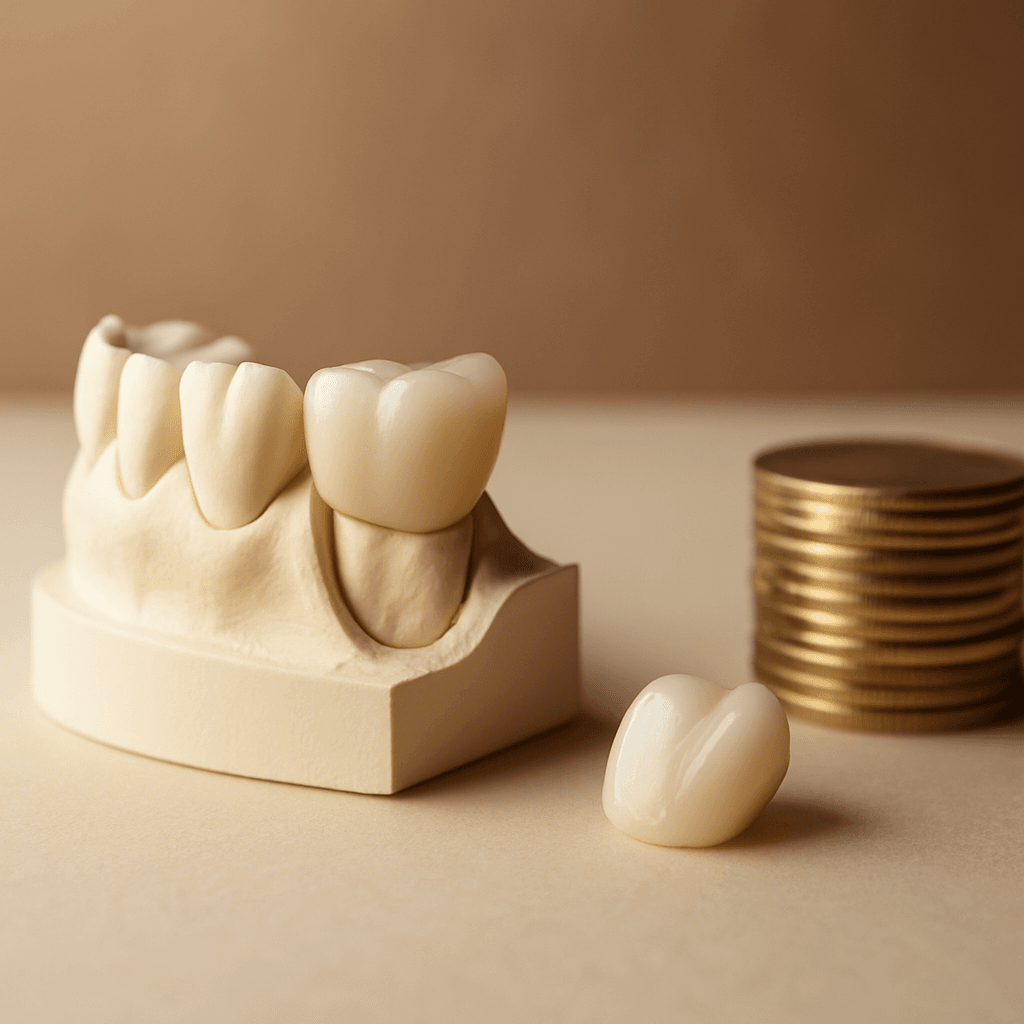
Dental crowns in Honeydew, Roodepoort are used to restore teeth that are cracked, weakened, worn down, or heavily restored. At Dr Chalita le Roux Inc in Amorosa, Roodepoort, we assess each tooth in person and recommend the crown material and workflow that suit your bite, smile, and timeline.Many suitable crowns can be designed with digital scanning and completed in a single visit using our CEREC CAD/CAM workflow, which can reduce time off work and limit repeat trips. If you are coming from Honeydew, the practice is a short drive north-east via Beyers Naude Drive, making it a convenient nearby option for personalised care from one dentist start to finish.
- Dental crowns protect and restore teeth that are damaged, weakened, or cosmetically compromised.
- Many suitable crowns can be completed in one visit with digital scanning and same-day CAD/CAM design.
- The right crown depends on the tooth, your bite, the visible smile zone, and how much structure remains.
- Patients from Honeydew can reach our Roodepoort practice conveniently via Beyers Naude Drive.
- We assess every case in person and provide a written, personalised estimate after consultation before treatment starts.
What is a dental crown?
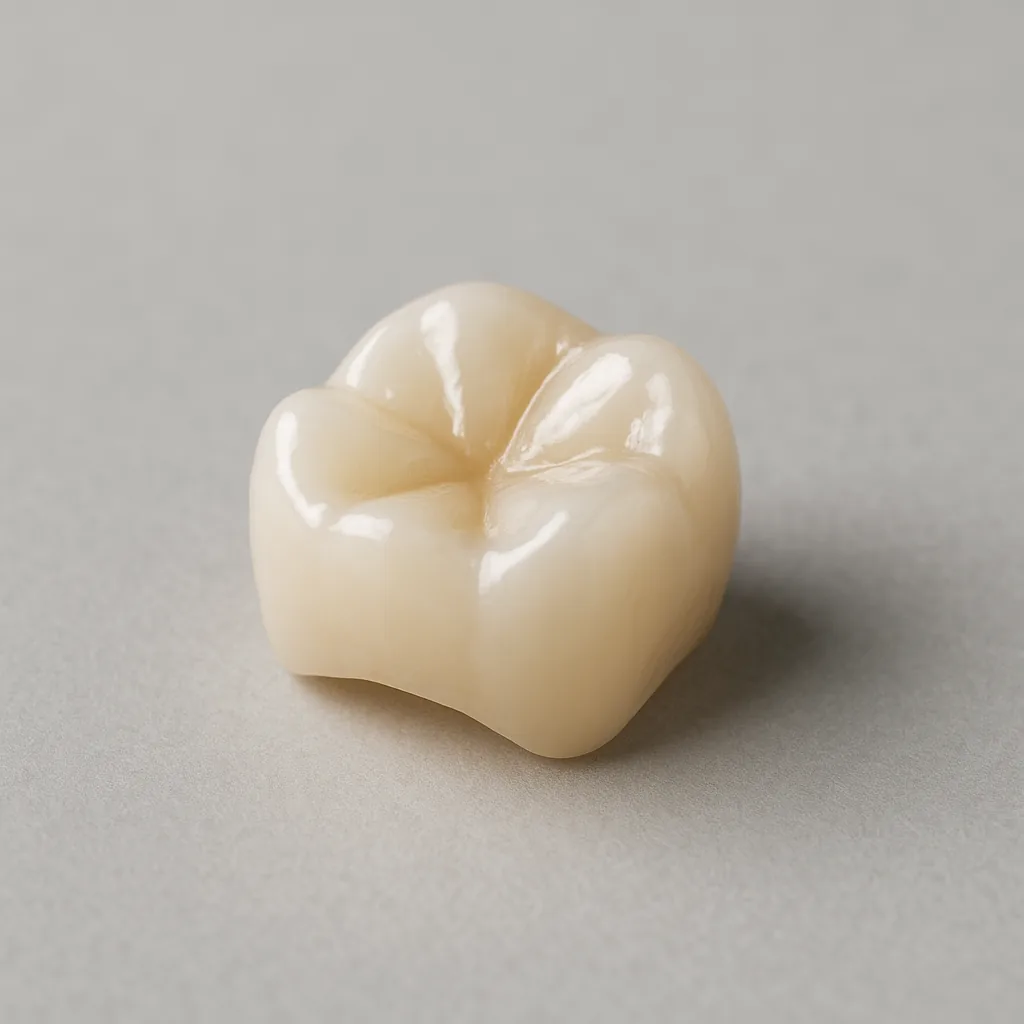
A dental crown is a custom-made cap that covers the visible part of a tooth. It is used when a filling is no longer enough to support the tooth, when a tooth has fractured, or when a tooth has been weakened after root canal treatment or extensive decay. The goal is to rebuild strength, improve function, and create a natural-looking result that fits your bite.
Crowns can be made from different materials, and the right option depends on where the tooth sits, how much pressure it carries, and how much of the tooth structure remains. We assess this in person so we can recommend an approach that supports both durability and appearance.
Who is a dental crown suitable for?
A crown may suit patients with a cracked tooth, a worn tooth, a tooth with a large filling, or a tooth that has become fragile after restorative or root canal treatment. It may also be considered when a tooth needs shape correction or when a single tooth in the smile zone needs a more refined finish.
A crown is not chosen automatically. We examine the tooth, the surrounding gums, the bite, and the amount of remaining enamel or dentine before recommending treatment. In some cases, a different restorative option may be more suitable, and that decision is made after an in-person consultation.
How does the crown treatment process work?
Your visit starts with an examination and digital scanning so we can plan the restoration accurately. For many suitable cases, this allows us to design and make the crown on site using our CEREC CAD/CAM workflow. That can mean the tooth is prepared, scanned, designed, milled, and fitted during the same appointment.
If your case needs more detailed planning, or if the tooth and bite need extra preparation, we will explain the recommended sequence clearly. Our approach is personalised from start to finish, and we focus on making the process as efficient and comfortable as possible while protecting the long-term health of the tooth.
How long do crowns last and what affects the cost?
Crown longevity depends on the material chosen, the quality of the fit, your oral hygiene, grinding habits, the condition of the underlying tooth, and how well the crown is integrated into your bite. A crown is an investment in function and appearance, so the choice of material and laboratory or digital workflow can affect the overall cost.
Cost is driven by factors such as the number of teeth involved, the complexity of the preparation, the material selected, and whether the restoration is made through digital in-practice design or external lab work. Some options are lower tier, some moderate, and some higher tier depending on the level of detail and durability required. An exact, personalised estimate is given after the consultation, in writing, before any treatment starts.
What should I expect after my crown is placed?
After placement, many patients adjust quickly, although it can take a little time for the tooth to feel completely familiar in the bite. We check the fit carefully so the crown sits comfortably and functions properly when you chew and speak. If the tooth is sensitive at first, that usually settles as the area adapts.
Good home care remains important. Brushing well, cleaning between the teeth, and attending routine check-ups help protect the crowned tooth and the surrounding gums. If you grind your teeth, we may discuss a night-time protective appliance, because extra pressure can shorten the life of the restoration and affect the underlying tooth.
What your crown visit may involve at our Roodepoort practice
| Step | In-practice digital crown visit | Traditional crown workflow |
|---|---|---|
| Assessment | Clinical examination and bite review by Dr Chalita le Roux | Clinical examination and bite review by Dr Chalita le Roux |
| Scanning | Digital scan of the tooth and surrounding bite | Physical impression material may be used |
| Design | On-site CAD/CAM design for suitable cases | Design and fabrication are usually handled through a laboratory |
| Turnaround | Many suitable cases can be completed in one visit | Usually requires more than one appointment |
| Time away from work | Less time off for many patients | More scheduling and repeat visits may be needed |
| Fit and finish | Direct chairside refinement and same-day placement where suitable | Later fitting appointment after laboratory fabrication |
| Personalisation | One dentist guides the case from scan to final adjustment | Treatment may be split across more steps |
Related pages
Dental Crowns · Smile Makeovers · Cosmetic Dentistry · All treatments & service areas
Nearby and related treatments
Dental Crowns in Ruimsig, Roodepoort · Dental Crowns in Dainfern, Roodepoort · Anti-Wrinkle Treatment near Honeydew · Same Day Crowns in Honeydew, Roodepoort
Frequently asked questions
Do I need a crown or would a filling be enough?
It depends on how much healthy tooth structure is left and how the tooth functions in your bite. A filling may be suitable for smaller areas of decay or wear, while a crown is often considered when the tooth is more extensively weakened, cracked, or heavily restored. We assess this in person, because the right option depends on the condition of the tooth, not just the visible damage.
Can a crown be done in one visit?
Many suitable crowns can be completed in one visit using digital scanning and CEREC CAD/CAM technology. This approach can reduce the need for repeat appointments and may suit patients who want to limit time away from work or travel. Some cases still need a different sequence, and we decide that after examining the tooth, the bite, and the surrounding tissues.
How do I get to the practice from Honeydew?
If you are travelling from Honeydew, the practice is a short drive north-east via Beyers Naude Drive into Amorosa, Roodepoort. That makes it a convenient nearby option for patients who want personalised care without travelling far into the city. We can guide you on the route when you book, and your treatment plan is confirmed during practice hours.
What kinds of teeth are crowns used on?
Crowns are commonly used on back teeth that take more chewing force, on front teeth that need strength and improved appearance, and on teeth that have been weakened after extensive restorative work. They may also be used when a tooth has fractured or when a more protective restoration is needed. We assess the tooth in person to decide whether a crown is appropriate.
Will my crown look natural?
A crown is designed to blend with the surrounding teeth as closely as possible. The shade, shape, and surface finish are chosen with your smile in mind, and the result depends on the tooth position, material choice, and the detail needed for the case. Front teeth often need extra attention to appearance, while back teeth are planned with strength and wear resistance in mind.
Is a crown the same as a veneer?
No. A crown covers the full visible part of a tooth, while a veneer covers only the front surface. Crowns are generally used when a tooth needs more structural support, whereas veneers are often considered for shape and cosmetic refinement. The right option depends on the condition of the tooth, and we assess this in person before recommending treatment.
What should I avoid after getting a crown?
You should avoid biting very hard objects with the restored tooth, especially while you are still getting used to the fit. It is also wise to keep up with good brushing and cleaning between the teeth so the gumline stays healthy around the crown. If you clench or grind, tell us, because we may discuss additional protection for the restoration.
How is the cost of a crown decided?
The cost is shaped by the material selected, the number of teeth involved, the complexity of the preparation, and whether the crown is made through digital in-practice design or external laboratory work. A case that needs more cosmetic detail or more structural support may sit in a higher tier than a simpler restoration. An exact, personalised estimate is given after the consultation, in writing, before any treatment starts.
Book a consultation
To discuss dental crowns honeydew with Dr Chalita le Roux, WhatsApp us on 083 710 9131, call 071 884 3204, or send us a message. We are in Amorosa, Roodepoort, open Monday to Friday, 08:00 to 17:00, with free on-site parking.
Written and clinically reviewed by Dr Chalita le Roux, BChD cum laude (University of Pretoria, 2020), HPCSA DP 0118702, member of the South African Academy of Aesthetic Dentistry. In private practice in Roodepoort since 2022.
This page is general information, not a diagnosis or treatment plan. What is right for your teeth is decided at a consultation with a registered dental practitioner.