
Composite bonding is a cosmetic dental treatment that uses tooth-coloured resin to reshape and refine your smile without drilling away large amounts of tooth. At Dr Chalita le Roux Inc in Amorosa, Roodepoort, we plan and provide composite bonding in a personalised, start-to-finish process with one dentist. In a consultation we assess your teeth, discuss your goals and advise whether composite bonding is the right option for you.
- Composite bonding uses tooth-coloured resin to repair chips, close small gaps and refine tooth shape.
- It is often a conservative option that keeps most of your natural tooth structure intact.
- Treatment is planned individually after a consultation, sometimes combined with whitening or clear aligners.
- Cost depends on the number of teeth, complexity and materials, usually sitting in the $–$$ range.
- Many patients can have composite bonding completed in a single visit at our Roodepoort practice.
What is composite bonding and how can it improve my smile?
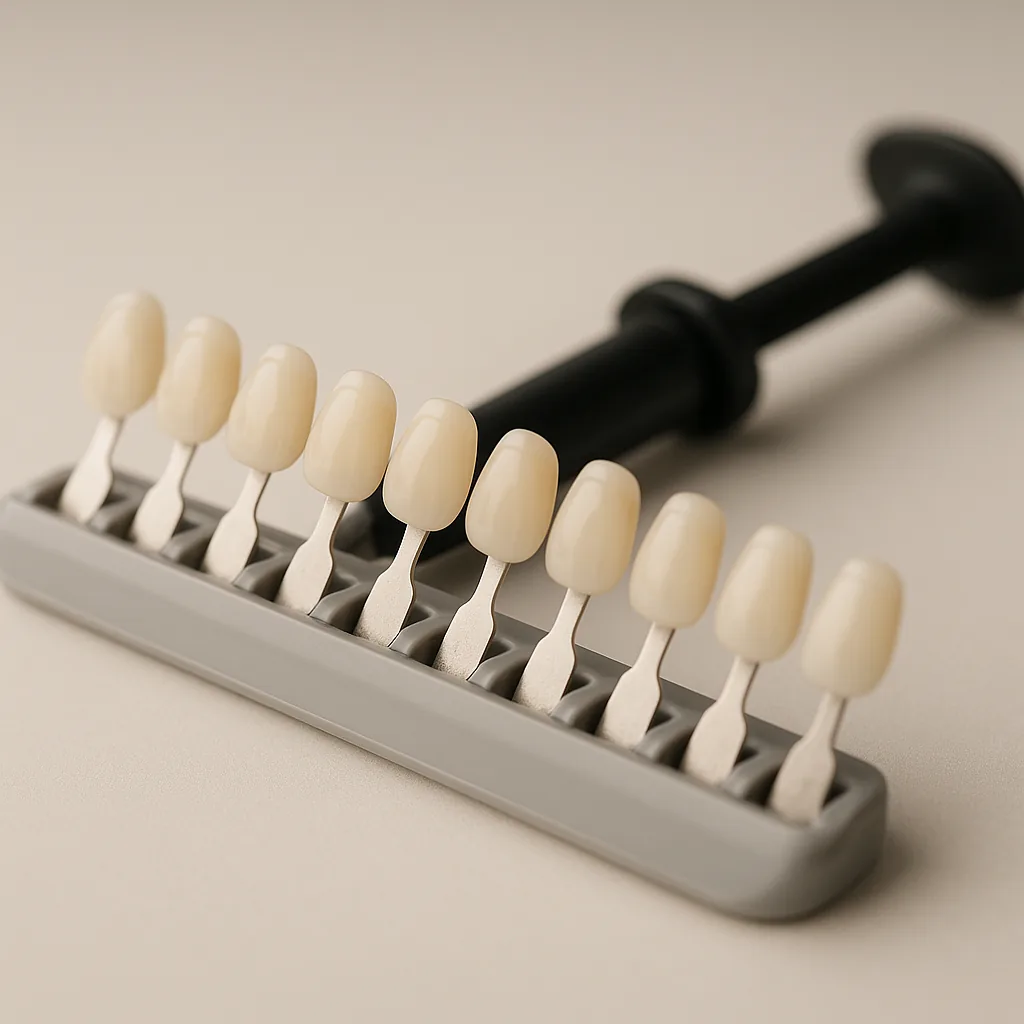
Composite bonding is a cosmetic dental treatment where a tooth-coloured resin is carefully layered onto the front or edges of a tooth to change its shape, size or colour. The material is sculpted to blend with the surrounding teeth and then hardened with a curing light, giving an immediate improvement in appearance. Because the resin bonds micromechanically to the enamel, the dentist can often make noticeable changes using minimal or no drilling.
Composite bonding can address a wide range of small to moderate aesthetic concerns. Common uses include repairing chipped edges, closing minor spaces between teeth, disguising localised discolouration and refining the proportions of teeth that look too short or slightly uneven. It is often chosen by patients who want a visible change without committing to more extensive treatments such as multiple crowns or porcelain veneers. At your consultation in Roodepoort we examine your bite, enamel and gum health to determine whether composite bonding can safely achieve the changes you have in mind.
Dr Chalita le Roux plans composite bonding by starting with photographs, digital scans and a detailed discussion of what you would like to change. In some cases we recommend whitening or clear aligner treatment first, so that the final bonded restorations match a brighter, straighter baseline. All of these options are discussed face to face, and we only proceed with bonding once the functional aspects of your teeth and bite are assessed in person.
Who is a good candidate for composite bonding in South Africa?
Composite bonding is well suited to patients with small to moderate cosmetic concerns rather than major structural problems. Ideal candidates typically have generally healthy teeth and gums, with issues such as minor chips, worn edges, small gaps, mild unevenness or isolated discolouration on one or several front teeth. If your teeth are already straight or only slightly crowded, bonding may provide the refinement you are looking for in fewer visits.
It may be less suitable if your teeth have extensive decay, large existing fillings, severe misalignment or heavy grinding that could quickly damage the bonded resin. In those situations we may discuss alternatives such as clear aligners, full-coverage crowns or porcelain veneers, depending on what the clinical examination shows. We also look at your bite, how your upper and lower teeth meet, and any signs of clenching, because these factors influence how long composite bonding can be expected to last.
During your consultation at Dr Chalita le Roux Inc in Amorosa Office Park, Roodepoort, we take time to understand your goals, examine each tooth and review your dental history. This allows us to advise honestly whether composite bonding is likely to meet your expectations or whether another treatment might serve you better. No decisions are made until this in-person assessment is complete and you have had the opportunity to ask questions about each option.
What happens during a composite bonding appointment at your Roodepoort practice?
A composite bonding appointment is planned in detail and carried out by the same dentist from start to finish. After your initial consultation and treatment planning, we schedule a dedicated visit where we focus on the agreed teeth. When you arrive at our Roodepoort practice, we review the plan together and confirm the shade and shapes we are aiming for, often using photographs or digital scans taken previously.
The teeth to be bonded are cleaned thoroughly, and in some cases the enamel surface is very lightly roughened to create an ideal bonding surface. A bonding agent is applied, and then tooth-coloured resin is carefully placed in thin layers. Each layer is shaped with fine instruments and hardened with a curing light before the next layer is added. This layering technique allows fine control over the final shape and translucency, so the result can blend with your natural teeth.
Once the desired contours are achieved, Dr le Roux refines the bonded areas using polishing discs and finishing strips to create a smooth, glossy surface. You will be asked to bite and speak so we can check your comfort and occlusion, making small adjustments where necessary. Many straightforward cases can be completed in a single visit, especially when only one or a few teeth are involved. For more complex changes, you may need a longer appointment or an additional visit, which will be explained during the consultation before any treatment starts.
What are the benefits and limitations of composite bonding compared with veneers?
Composite bonding offers several advantages, particularly for patients seeking conservative changes. The process usually involves preserving most of the existing enamel, as the dentist can often work directly on the natural tooth with minimal drilling. Treatment can frequently be completed in one appointment, and any changes or repairs in future are generally straightforward to carry out. Because the material is applied directly in the mouth, the dentist has fine control over the final shape and can make adjustments in real time according to your feedback.
Porcelain veneers, by comparison, are thin ceramic shells crafted in a dental laboratory or in-practice using CAD/CAM technology. They may provide more durable colour stability and wear resistance, and they can be an excellent choice for more significant changes in shape, alignment or colour. However, veneers usually require more tooth preparation and are a higher commitment because some enamel is removed to make space for the ceramic. They often fall into the $$–$$$ relative cost tier, reflecting the laboratory work and materials involved.
Composite bonding has its limitations. The resin is more prone to staining over time from coffee, tea, red wine and smoking, and may chip or wear faster than porcelain, especially in patients who grind their teeth. While small repairs are manageable, very extensive changes may be better served by veneers or crowns. At our Roodepoort practice we use digital scanning and, where clinically suitable, CEREC CAD/CAM technology to offer same-day ceramic options for some patients, and we explain how composite bonding compares for your specific case. The right choice is always made after a detailed consultation where we assess your teeth in person and discuss the advantages and limitations of each option.
How much does composite bonding cost in South Africa and what affects the price?
Patients across South Africa often search for the cost of composite bonding because they want to understand how it compares with veneers or crowns. Instead of fixed fees, we look at the factors that drive cost. Composite bonding usually sits in the $–$$ relative tier, reflecting that it uses high-quality resin materials but does not involve laboratory-made porcelain. Porcelain veneers and full crowns are more commonly in the $$–$$$ tier, as they require ceramic materials and additional fabrication steps.
Key cost drivers include the number of teeth involved, the complexity of the changes and whether we need to combine bonding with other treatments such as whitening or clear aligners. Subtle reshaping on a single tooth is very different from a comprehensive smile makeover across many teeth. Time in the chair, the planning required and any digital workflows we use also influence the overall fee. Composite bonding can be more cost-effective when you want targeted improvements without extensive preparation.
During your consultation at Dr Chalita le Roux Inc in Amorosa, Roodepoort, we examine your teeth, discuss your goals and explain all suitable options, including their relative cost tiers. An exact, personalised estimate is given after the consultation, in writing, before any treatment starts. This allows you to decide on treatment with a full understanding of what is involved and what you can expect from the investment in your smile.
Composite bonding vs porcelain veneers: how they compare
| Aspect | Composite bonding | Porcelain veneers |
|---|---|---|
| Relative cost tier | $–$$ depending on number of teeth and complexity | $$–$$$ reflecting lab work and ceramic materials |
| Tooth preparation | Usually minimal, often preserves most natural enamel | Typically requires more enamel reduction to make space for ceramic |
| Number of visits | Many cases completed in a single visit | Often involves at least two visits, though some same-day options exist with CAD/CAM |
| Durability and stain resistance | Good, but more prone to staining and wear over time | High stain resistance and longer-term colour stability when well cared for |
| Repair and adjustment | Relatively straightforward to repair or add resin if chips occur | Repairs may require replacement of the veneer if damage is significant |
| Ideal use cases | Small chips, minor gaps, localised discolouration, subtle reshaping | More extensive changes in colour, shape, alignment or heavily worn teeth |
Related pages
Porcelain Veneers · Smile Makeovers · Cosmetic Dentistry · All treatments & service areas
Nearby and related treatments
Composite Bonding in Wilropark, Roodepoort · Composite Bonding in Helderkruin, Roodepoort · Composite Bonding in Roodekrans, Roodepoort · Composite Bonding in Northcliff, Roodepoort
Frequently asked questions
Is composite bonding painful?
Most composite bonding procedures are comfortably tolerated because they often involve minimal alteration of the tooth surface. In many cases, little or no local anaesthetic is needed, though we can use it if any sensitivity is expected. You may feel gentle pressure as the resin is placed and shaped, but this is usually easy to manage. We discuss your comfort thoroughly at the consultation and plan the procedure accordingly.
How long does composite bonding last on front teeth?
Composite bonding can last several years on front teeth when placed carefully and maintained with good oral hygiene and sensible habits. Factors that influence longevity include your bite, any grinding or clenching, your diet and how well you avoid habits like biting pens or opening packets with your teeth. Regular check-ups allow us to monitor the bonded areas and perform small repairs or polishing when needed. We talk about expected longevity for your specific case at the consultation.
Can composite bonding be done in one day?
Yes, many straightforward composite bonding cases can be completed in a single visit once the consultation and planning are done. At our Roodepoort practice, simple repairs on one or a few teeth are often finished in one appointment, giving you an immediate improvement. More complex smile makeovers may require longer or staged visits. We outline the expected number and length of appointments after assessing your teeth in person and agreeing on the treatment plan.
Will composite bonding look natural?
Composite bonding is designed to look natural, as we use tooth-coloured resin carefully matched to your existing enamel. The material is layered and shaped to mimic the translucency and contours of a normal tooth. Polishing gives a smooth, glossy finish that blends with neighbouring teeth. Achieving a natural appearance depends on detailed planning and precise technique, which we discuss and demonstrate during your consultation with photos and shade selection.
Do I need whitening before composite bonding?
Whitening is not mandatory before composite bonding, but it can be beneficial if you would like a brighter overall tooth shade. Once bonding is placed, it will not lighten with whitening like natural enamel does, so many patients choose to whiten first and then match the composite to the new colour. Whether this is appropriate for you depends on your current tooth colour, sensitivity and goals, and we decide on the sequence after examining your teeth in person.
How should I care for my teeth after composite bonding?
After composite bonding, regular brushing and flossing remain essential, along with six-monthly check-ups or as advised. Limiting very hard foods on the bonded edges and avoiding biting nails or opening objects with your teeth reduces the risk of chipping. Moderating staining drinks like coffee, tea and red wine helps maintain the colour, and using a mouthguard may be recommended if you grind your teeth at night. We provide tailored aftercare guidance during and after your appointment.
Is composite bonding suitable for closing gaps between my teeth?
Composite bonding can be an effective way to close small gaps between teeth by carefully adding tooth-coloured resin to the sides of the teeth. This approach works well when the spaces are modest and the bite allows safe widening of the teeth. For larger gaps or more complex spacing, we may suggest clear aligners or a combination of alignment and bonding. The suitability of bonding for your gaps is assessed in detail at your consultation in Roodepoort.
How do I book a composite bonding consultation at your Roodepoort practice?
You can contact Dr Chalita le Roux Inc in Amorosa, Roodepoort, by phone or WhatsApp to arrange a composite bonding consultation. Our WhatsApp booking assistant replies 24/7; appointments are confirmed during practice hours, Monday to Friday, 08:00 to 17:00. At the visit, Dr le Roux will examine your teeth, discuss your goals and outline suitable treatment options, including composite bonding, with a written estimate provided before any treatment starts.
Book a consultation
To discuss composite bonding south africa with Dr Chalita le Roux, WhatsApp us on 083 710 9131, call 071 884 3204, or send us a message. We are in Amorosa, Roodepoort, open Monday to Friday, 08:00 to 17:00, with free on-site parking.
Written and clinically reviewed by Dr Chalita le Roux, BChD cum laude (University of Pretoria, 2020), HPCSA DP 0118702, member of the South African Academy of Aesthetic Dentistry. In private practice in Roodepoort since 2022.
This page is general information, not a diagnosis or treatment plan. What is right for your teeth is decided at a consultation with a registered dental practitioner.