Digital smile design is a planning method, not a treatment. It uses photographs, scans and software to show what a proposed change to your teeth would look like before any tooth is touched — so you can approve, adjust or walk away from a plan while it is still only a plan.
That is the part most people want explained. Below is what the process actually involves, what it can and cannot predict, which treatments it is useful for, and how to tell whether a practice is genuinely planning digitally or simply using the phrase.
What is digital smile design?
Digital smile design (DSD) is a way of assessing and planning cosmetic dental treatment using photographs, digital images and, where appropriate, scans of your teeth. The dentist considers how tooth shape, size and position relate to your gums, lips and face, as well as your bite and oral health. The aim is to discuss a plan that fits your features and goals, rather than choosing a treatment from a photograph alone. DSD is a planning approach, not a treatment in itself and not a guarantee that a digital preview can be reproduced exactly. A proposed change may involve one procedure or several, and some features of a preview may need to be adjusted after a clinical examination. Healthy teeth and gums are an important starting point; problems such as decay or gum disease may need attention before cosmetic work is considered. At Dr Chalita le Roux Inc. in Roodepoort, a consultation can help establish whether digital planning is relevant to your concerns and what options are clinically appropriate. The plan may involve cosmetic dentistry such as whitening, veneers or a smile makeover, or another service if that better addresses the issue. You can discuss the likely stages, limitations and maintenance before deciding whether to proceed.Start with your goals and consultation
A useful DSD consultation starts with what you would like to change. You might be concerned about tooth colour, uneven edges, spacing, worn teeth or how your smile looks in photographs. It is also helpful to say what you would prefer to keep, how much change feels comfortable and whether you have a time frame in mind. Dr Chalita le Roux will assess your teeth, gums and bite and ask about relevant dental history. Photographs or digital records may be taken to support discussion and planning. These records do not replace an examination: a plan needs to account for oral health, existing dental work, tooth structure and how your teeth meet when you bite. If there is decay, gum inflammation or another concern, that may need to be addressed before cosmetic treatment. At Dr Chalita le Roux Inc., consultations are available in English and Afrikaans. The practice is at Unit 2, Amorosa Office Park, Corner of Doreen Road and Lawrence Road, Amorosa, Roodepoort, 2040, with free on-site parking. Opening hours are Monday to Friday, 08:00 to 17:00; the practice is closed on weekends and South African public holidays. The consultation is a chance to ask about alternatives, possible limitations, treatment stages and cost before making a decision.How your smile is digitally planned
Digital planning brings clinical findings and visual records together so that possible changes can be discussed clearly. Depending on the case, records may include photographs, a digital scan of the teeth and information about the bite. The dentist reviews the relationship between tooth proportions, gum contours, facial features and the way the upper and lower teeth come together. A proposed tooth shape or position can then be considered in relation to the rest of the smile. The planning process is individual: a small adjustment to tooth edges has different implications from changing several teeth or combining cosmetic and restorative work. A digital image is a planning aid, not a diagnosis on its own. It cannot show every detail of tooth health, and the final approach may change after an examination or as treatment progresses. Your dentist should explain what records are being used, what the proposed plan involves and whether alternatives are available. If treatment is appropriate, the plan can be divided into stages, such as addressing oral-health concerns first and cosmetic procedures later. At Dr Chalita le Roux Inc. in Roodepoort, the consultation is an opportunity to discuss the clinical reasoning behind a proposal, its limits and how it relates to your goals before you choose whether to proceed.See a preview of your new smile
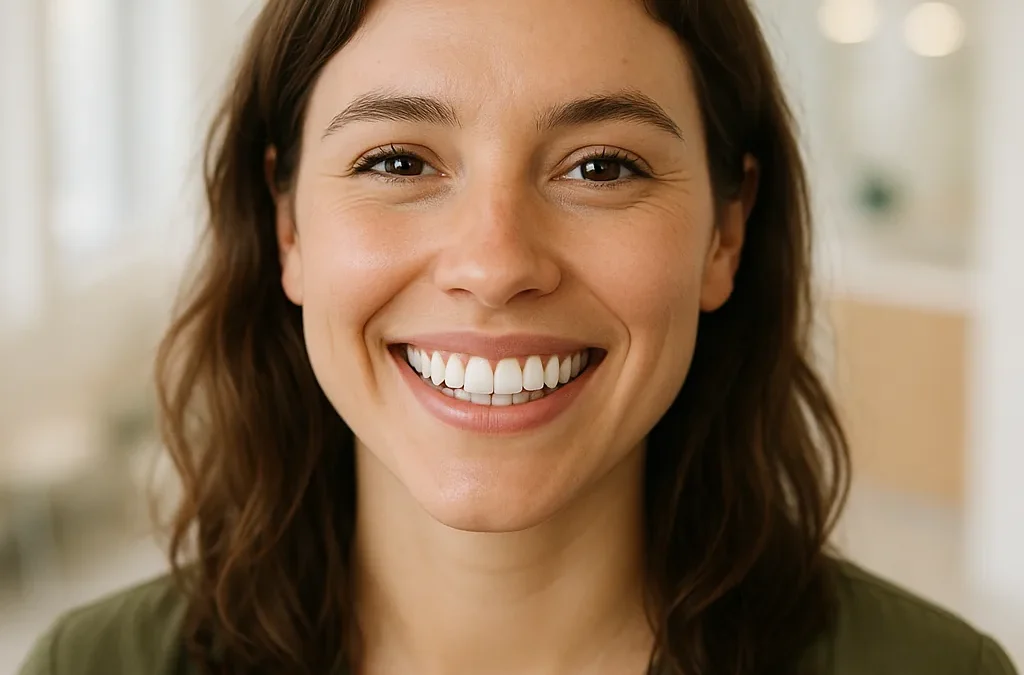
A digital preview can help you discuss possible changes to tooth shape, proportions or alignment before treatment starts. It may use photographs or digital records to illustrate a proposed direction, making it easier to explain what you like and what you would change. In some cases, a mock-up or other trial representation may also be possible, depending on the records, proposed treatment and clinical suitability. Ask your dentist what kind of preview is available and whether it is digital, physical or both. A preview is an illustration, not a final result or a promise that every detail can be reproduced. Lighting, camera angles and image editing can affect how a smile appears on screen, while your bite, gums and tooth structure influence what is practical in the mouth. The final shape and shade may also depend on the treatment selected and the materials used. Use the preview as a conversation tool: discuss what looks natural to you, what feels too dramatic and what compromises might be needed for oral health. At Dr Chalita le Roux Inc. in Roodepoort, a consultation can clarify whether a preview is suitable for your case and how it would inform a treatment plan.Treatments that can be planned with DSD
Digital smile design can help plan discussions about cosmetic treatments, but it does not determine which procedure is suitable. Depending on your teeth, gums, bite and goals, planning may relate to whitening, veneers or a broader smile makeover. If teeth need restorative care, the dentist may discuss options such as crowns; Dr Chalita le Roux Inc. offers CEREC same-day crowns when clinically appropriate. Clear-aligner treatment may be considered for certain alignment concerns, but suitability depends on the individual case. The practice also offers general dentistry, dental implants including All-on-4, and sedation dentistry; these are not automatically part of a cosmetic smile plan and require their own assessment. Good oral health matters before elective cosmetic work, and treatment for decay or gum problems may take priority. A careful discussion should cover what each procedure can and cannot change, alternatives, maintenance and possible effects on natural teeth. DSD is a planning aid rather than a reason to have treatment. At a consultation in Roodepoort, you can review the clinical findings and decide whether a proposed option matches your priorities and circumstances.How to choose a local dentist for DSD
When looking for a dentist who offers digital smile design, ask how the planning process is used in clinical decision-making. Find out what records may be taken, whether you can see a preview, and how the dentist checks tooth health, gum condition and bite before recommending cosmetic work. Ask what alternatives are available, what the plan cannot predict and how changes would be handled if clinical findings differ from the initial preview. It is reasonable to request a clear explanation of treatment stages, maintenance and fees before deciding. Check the practitioner’s qualifications and registration, and choose a practice where you feel comfortable asking questions without pressure. Dr Chalita le Roux holds BChD cum laude (UP 2020), HPCSA DP 0118702, SAAAD member. Dr Chalita le Roux Inc. is in Roodepoort at Unit 2, Amorosa Office Park, Corner of Doreen Road and Lawrence Road, Amorosa, Roodepoort, 2040. The practice offers general and cosmetic dentistry, including veneers, whitening and smile makeovers, as well as clear-aligner treatment and other listed dental services. Hours are Monday to Friday, 08:00 to 17:00, with free on-site parking. To ask about a consultation, call 071 884 3204” aria-label=”Call the practice on 071 884 3204″>071 884 3204 or 011 568 8285.How a smile design case runs at this practice
Planning happens before commitment, and in writing. A first consultation covers what you want changed and an examination of the teeth, gums and bite — because a cosmetic plan built on an untreated problem does not last. Records are taken only where they add something to the plan.
You then see the proposal and the alternatives, with the stages, the sequence and the fees set out before anything begins, as HPCSA transparency requires. Where a case suits it, digital impressions replace conventional putty trays, and CEREC CAD/CAM allows some ceramic work to be milled and fitted in one visit.
This is a single-dentist practice, so the clinician who plans your case is the clinician who carries it out — there is no hand-off mid-treatment. Dr Chalita le Roux is BChD cum laude (University of Pretoria, 2020), HPCSA-registered (DP 0118702), and a member of the South African Academy of Aesthetic Dentistry.
One honest limit: a digital preview is a design intention, not a promise of a result. Gum response, bite forces and the condition of the underlying teeth all shape the final outcome. A preview is most useful as a conversation about proportion and shape, not as a guarantee.
What smile design planning costs, and what moves it
Planning is usually a modest part of a cosmetic case; the treatment it plans is the larger part. Costs here are shown as relative tiers rather than figures, because the honest number depends on your mouth:
$ routine — consultation, examination, records and photographs.
$$ moderate — single-tooth work planned digitally: a ceramic crown, a composite veneer.
$$$ significant — a multi-tooth porcelain veneer
case or combined restorative and cosmetic treatment.
$$$$ major — a full smile makeover or full-arch
reconstruction across several visits.
What moves a case between tiers: how many teeth are actually visible when you smile, whether existing restorations need replacing, the material chosen, whether gum work or alignment has to come first, and how much laboratory involvement the plan needs. After the consultation you receive a written plan with a specific quote, before any treatment starts. The practice does not bill medical aid directly — you are given a detailed statement to submit to your scheme.
Frequently asked questions
How does digital smile design work?
The process usually begins with a consultation about your goals and an examination of your teeth, gums and bite. Photographs, scans or other records may be taken if they are useful for planning. The dentist uses the information to discuss possible changes and suitable treatment options; a preview may be available in some cases. The plan can change if an examination identifies health concerns or other limitations. Before proceeding, ask about alternatives, stages, maintenance and fees.How much does digital smile design cost in South Africa?
The cost depends on what the planning involves and whether you choose treatment afterwards. A consultation or records may be charged separately, while procedures such as whitening, veneers or crowns have different fees and clinical requirements. Rather than assuming DSD has one standard price, ask the practice for an itemised estimate after assessment. For broad budgeting, cosmetic treatment may be described using a $/$$/$$$/$$$$ tier system, but your written estimate should reflect your specific plan.Can you see what your new smile will look like before treatment?
A digital preview may help you discuss a proposed change before treatment, depending on the case and the records available. Ask your dentist what kind of preview can be provided and what it represents. It is an illustration, not a guarantee of the final appearance: tooth health, bite, gums, materials and treatment response all matter. A consultation can help you understand which parts of a preview are achievable and whether the plan needs adjustment.What treatments can be planned with digital smile design?
DSD may help plan discussions about cosmetic options such as whitening, veneers or a smile makeover. Depending on clinical findings, restorative care or clear-aligner treatment may also be discussed. Digital planning does not make a procedure suitable by itself; your teeth, gums, bite and goals need assessment first. At Dr Chalita le Roux Inc. in Roodepoort, available services include these cosmetic options and clear-aligner treatment. Your dentist can explain alternatives and whether treatment is appropriate for you.Is digital smile design painful?
Digital smile design itself is a planning process, so photographs, discussion and a digital scan are generally not painful. Any discomfort depends on the examination or treatment involved, not the planning concept. Procedures such as veneers or crowns may involve steps that need local anaesthesia, while other options may not. Your dentist can explain what to expect for the specific plan, discuss comfort measures and answer questions before treatment begins.How long does a smile makeover take?
There is no single time frame: it depends on the procedures, your oral health and how many stages are needed. Whitening may follow a different schedule from veneers, crowns or clear-aligner treatment. If decay or gum concerns need attention first, that can add time before cosmetic work. At a consultation, the dentist can outline the proposed sequence and likely appointment needs. The schedule may change if clinical findings require a different approach.How do I find a dentist who offers digital smile design?
Ask local dental practices whether they use digital records or previews as part of smile planning, and how they assess oral health before recommending cosmetic treatment. Check the dentist’s qualifications and HPCSA registration, and ask about alternatives, limitations, costs and follow-up care. In Roodepoort, Dr Chalita le Roux Inc. offers cosmetic dentistry and consultations to discuss whether digital planning is relevant to your goals. Call 071 884 3204” aria-label=”Call the practice on 071 884 3204″>071 884 3204 or 011 568 8285.Book a consultation
If you are considering changing the look of your front teeth, the useful first step is an examination and a conversation about what is realistic for your teeth — before any design work is paid for.
To arrange a cosmetic consultation, WhatsApp the practice on 083 710 9131, call 071 884 3204, or email info@drchalitaleroux.co.za. The practice is in Amorosa, Roodepoort, with free on-site parking, and treats patients Monday to Friday, 08:00 to 17:00.
Related pages: Smile makeovers in Roodepoort · Cosmetic dentist in Roodepoort · Porcelain veneers · CEREC same-day crowns
Last verified: October 2026. This article is general information about dental treatment and is not clinical advice for your situation. Diagnosis and treatment depend on an examination. Written by Dr Chalita le Roux, BChD cum laude (University of Pretoria, 2020), HPCSA registration DP 0118702, member of the South African Academy of Aesthetic Dentistry.