
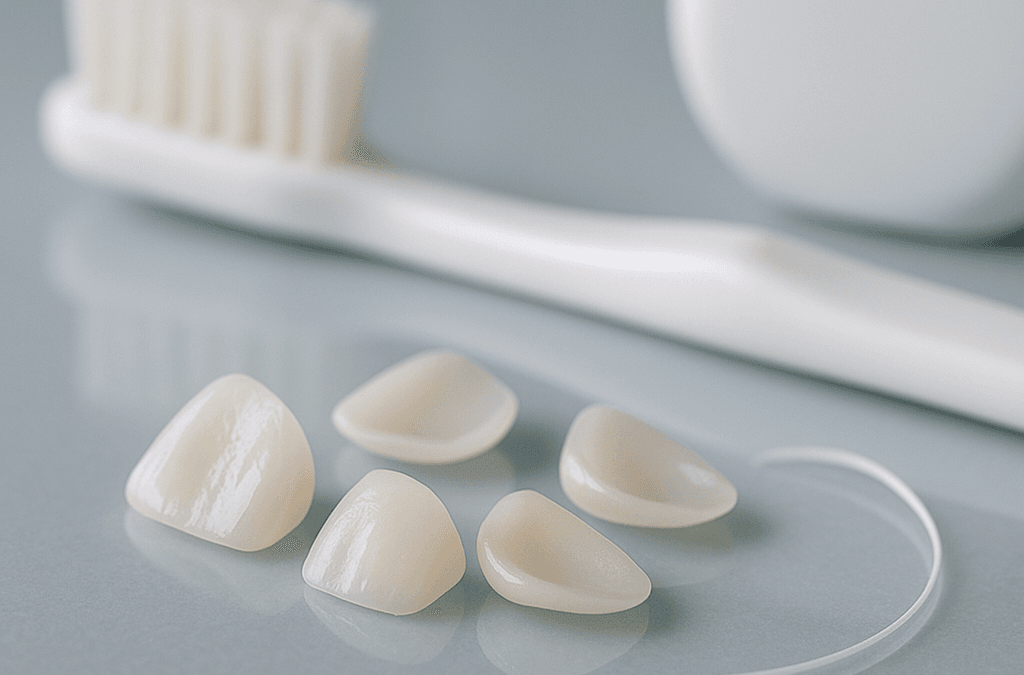
How long do veneers last? Most porcelain veneers last around 10 to 15 years, and often longer when they are well looked after. Veneers are thin shells bonded to the front of your teeth to improve their shape, colour and alignment, and how you care for them day to day has a real effect on how long they serve you. This guide explains veneer lifespan, simple aftercare, the habits that shorten it, and how we plan and maintain veneers at our Roodepoort practice. Everything here is general information – your own treatment is always planned face to face at a consultation with Dr Chalita le Roux.
How long do veneers last?
Most porcelain veneers last around 10 to 15 years, and many stay looking good for longer when the teeth and gums underneath stay healthy. Veneers are not permanent – they are long-term restorations that can eventually chip, stain at the edges, or need replacing as your bite and gums change over the years.
The veneer itself does not decay. What matters for the long term is the natural tooth underneath and the margin where the veneer meets the tooth, because these can still develop decay or gum problems if they are not kept clean. Good daily care and routine check-ups are what turn a good result into a lasting one.
Porcelain vs composite veneers: which lasts longer?
The two main types of veneer age differently. Porcelain veneers are made in a laboratory and tend to be more hard-wearing and stain-resistant, while composite veneers are built up directly on the tooth in a single visit and are easier to repair but usually have a shorter working life.
| Veneer type | Typical lifespan | Notes |
|---|---|---|
| Porcelain (lab-made) | Around 10 to 15 years, often longer | Stain-resistant and hard-wearing; needs lab work over more than one visit |
| Composite (direct) | Often around 5 to 10 years | Done chairside in one visit; easier to repair but wears and stains sooner |
Which one suits you depends on your goals, your bite and the condition of the teeth being treated. We will talk through both options at your consultation.
Daily care: how to look after your veneers
Caring for veneers is close to caring for natural teeth, with a few sensible extras:
Brush twice a day with a soft-bristled brush and a non-abrasive fluoride toothpaste. Avoid strongly abrasive or whitening pastes, which can dull the polish over time.
Clean between your teeth every day with floss or interdental brushes, paying attention to the gum line where the veneer meets the tooth.
Keep up regular dental check-ups and cleans so the edges and the gums stay healthy and any early issue is picked up while it is small.
Rinse after strongly coloured food and drink such as red wine, coffee, tea and curry. Natural teeth around the veneers can still stain, which can affect how well everything matches.
Habits that shorten veneer lifespan
A few everyday habits put veneers under strain and are worth avoiding:
Biting hard objects such as ice, pens, or fingernails, or using your teeth to open packaging, can chip or dislodge a veneer. Grinding or clenching (bruxism) also loads the veneers heavily – if you grind at night, a custom night guard is commonly recommended to protect them. Nail-biting and chewing very hard foods on the front teeth add avoidable wear and tear.
Do veneers still need dental check-ups?
Yes. Veneers do not remove the need for routine dental care – if anything, they make it more valuable. Regular visits let us check the margins, the gum health and your bite, and clean areas that are harder to reach at home. Catching a small chip, a lifting edge or early gum inflammation early is usually simpler than dealing with it once it has progressed.
Signs a veneer may need attention
Contact us if you notice any of the following, so we can take a look during our weekday hours:
A veneer feels loose or rough, a small chip or crack appears, the edge starts to stain or darken, a tooth becomes sensitive to hot or cold, or your gums bleed or feel sore around a veneer. None of these mean something has gone wrong – they are simply signs that a veneer would benefit from a check.
Considering porcelain veneers in Roodepoort? You can book a consultation with Dr Chalita le Roux to discuss your options — call 071 884 3204 or message us on WhatsApp, Monday to Friday, 08:00 to 17:00.
How we plan and maintain veneers in Roodepoort
At Dr Chalita le Roux Inc. in Roodepoort, veneers are planned around your bite, gum health and the look you want, so the result is designed to last as well as to look natural. We take time at the consultation to explain what is realistic for your teeth, and we plan the aftercare and review visits that help veneers stay in good condition. Routine check-ups during our weekday hours are where we keep an eye on the margins and the health of the teeth underneath.
Thinking about veneers, or wondering whether your current ones are due for a check? You can book a veneers consultation in Roodepoort with Dr Chalita le Roux.
Frequently asked questions
How long do veneers last?
Most porcelain veneers last around 10 to 15 years, and often longer when the teeth and gums underneath stay healthy and the veneers are well looked after. Composite veneers usually have a shorter working life, often around 5 to 10 years. Veneers are not permanent, so they may eventually chip, stain at the edges or need replacing over time.
Can you whiten veneers?
No. Porcelain and composite veneers do not respond to tooth-whitening the way natural enamel does, so their shade stays much as it was made. This is one reason veneer colour is chosen carefully at the planning stage. If your natural teeth around the veneers have darkened, we can discuss the options at a consultation in Roodepoort.
Do veneers get cavities?
The veneer itself does not decay, but the natural tooth underneath and the margin where the veneer meets the tooth can still develop decay if they are not kept clean. Daily brushing and cleaning between the teeth, plus regular check-ups, are what protect the tooth under the veneer over the long term.
Do I need a night guard with veneers?
If you grind or clench your teeth at night, a custom night guard is commonly recommended to protect veneers from the heavy forces of grinding. Not everyone needs one – whether it is worthwhile depends on your bite and whether you show signs of grinding, which we can assess at your appointment.
How should I clean my veneers?
Brush twice a day with a soft brush and a non-abrasive fluoride toothpaste, clean between your teeth every day, and keep up your regular dental check-ups and cleans. Avoid biting hard objects and try not to use your teeth as tools, as this is a common cause of chips.
If you would like a plan for your own smile, you can book a veneers consultation in Roodepoort. We reply within two business days, Monday to Friday, 08:00 to 17:00.
To book a consultation in Roodepoort, call 071 884 3204 or WhatsApp 083 710 9131 or email info@drchalitaleroux.co.za. You can also find us on Google Maps.
Related reading on our site: Porcelain veneers in Roodepoort · Dental crowns in Roodepoort · Dr Chalita le Roux.
This article is general information about dental treatment and is not a diagnosis or a substitute for professional dental advice. Suitability, risks and outcomes vary from person to person and can only be confirmed at a consultation with a registered dentist. Dr Chalita le Roux practises in Roodepoort, Monday to Friday, 08:00 to 17:00.
Book a consultation in Roodepoort
To arrange a no-obligation consultation with Dr Chalita le Roux, call 071 884 3204, message us on WhatsApp, or email info@drchalitaleroux.co.za. We reply within two business days, Monday to Friday, 08:00 to 17:00.
Related reading: Porcelain veneers in Roodepoort · Dentist in Roodepoort · About Dr Chalita le Roux