CEREC same day crowns are custom ceramic crowns that can be designed, milled and fitted in a single visit when the tooth is suitable — no putty impressions and, in many cases, no temporary crown or second appointment. This guide explains what the treatment involves, how the digital workflow works, and how we decide whether a same-day crown is right for your tooth at our Roodepoort practice. Everything here is general information — your own treatment is always planned face to face at a consultation with Dr Chalita le Roux.
What are CEREC same day crowns?
CEREC same day crowns are custom-made ceramic crowns designed, milled, and fitted in one dental visit when the case is suitable. They are used to restore teeth that are weakened, heavily filled, cracked, worn, or treated with root canal therapy, where a full crown is needed to protect the tooth and rebuild its shape and function. At Dr Chalita le Roux Inc. in Roodepoort, these crowns are part of our digital dentistry workflow and are planned chair-side rather than being sent to an outside laboratory.
A crown covers the visible part of the tooth above the gum line, helping it handle normal biting forces again while also improving appearance. CEREC crowns are made from ceramic, which can be matched closely to the colour of nearby teeth. They are not the right choice for every case, because some teeth need other treatment first, and some restorations still benefit from a laboratory-made crown. During the consultation, Dr Chalita le Roux, BChD cum laude (UP 2020), HPCSA DP 0118702, SAAAD member, checks whether the tooth is stable enough for a same-day restoration and explains the options clearly.
Benefits of same day crowns
The main advantage of same day crowns is convenience: in suitable cases, the tooth can be prepared, scanned, designed, milled, and fitted in one visit. That means fewer appointments, less time away from work or family commitments, and no need to manage a temporary crown while waiting for a lab-made restoration. For many patients, that is a practical benefit rather than just a cosmetic one.
Because the crown is made from a digital scan, the fit can be planned with a high level of precision. The ceramic material also has a natural appearance and is often a good option for visible back and front teeth, depending on the bite and the amount of tooth structure left. At our Roodepoort practice, same day crowns can also be useful after certain root canal cases once the tooth is stable, or when an old filling has become too large to repair predictably. The treatment still needs proper diagnosis, because a crown is not the answer for every painful or broken tooth. If the tooth has active infection, very deep decay, or another structural problem, a different sequence of care may be safer first.
If you think a same-day crown might suit you, learn more about same-day dentistry in Roodepoort or dental crowns at our practice.
How CEREC same day crowns work
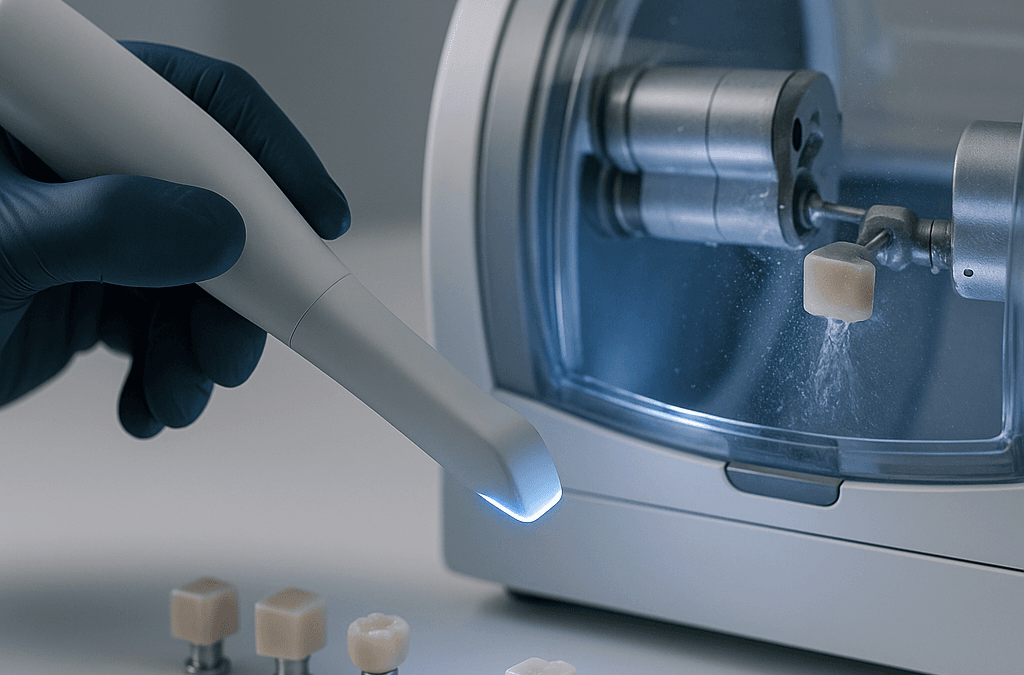
CEREC same day crowns follow a digital workflow. First, the tooth is examined and prepared only if a crown is clinically appropriate. The damaged or weakened area is shaped so the new crown can sit securely and restore the bite. Instead of using a conventional mould, the tooth is scanned digitally to capture its shape and the surrounding teeth.
That scan is then used to design the crown on a computer while you are still in the chair. The design takes into account the bite, contact points, and the shape needed to look and function naturally. Once the design is approved, the crown is milled from a ceramic block in the practice. After milling, it is checked, adjusted if needed, polished, and bonded or cemented to the tooth. In many cases, this allows the tooth to be restored in one appointment. At Dr Chalita le Roux Inc. in Roodepoort, this process is done during regular weekday hours only, and the team will tell you upfront if the tooth needs extra treatment before a crown can be made.
Digital scans instead of messy impressions
For many patients, one of the most noticeable differences with CEREC crowns is the use of a digital scan instead of traditional impression material. A small scanner is moved around the mouth to capture a detailed 3D image of the tooth and the neighbouring teeth. This replaces the old method of biting into a tray filled with putty-like material.
Digital scanning is often more comfortable, especially for patients with a strong gag reflex or a sensitive mouth. It also gives the dentist an immediate image to review, so if a section needs to be captured again, it can be retaken straight away. That can help reduce delays and improve the accuracy of the restoration. The scan is not just a picture; it becomes the working model used to design the crown. At our Roodepoort practice, this is part of a broader digital dentistry approach that helps streamline treatment without rushing diagnosis. The scan still needs to be interpreted properly, because a crown depends on healthy supporting tooth structure, a stable bite, and good gum condition around the tooth.
How the crown is designed and milled
Once the digital scan has been taken, the crown is designed on specialist software chair-side. The dentist uses the scan to map the tooth’s shape, size, contours, and how it meets the opposing teeth when you bite. The aim is not just to make a tooth-shaped cover, but to create a restoration that fits the bite properly and supports normal chewing.
After the design is finalised, the crown is milled from a ceramic block by the CEREC unit in the practice. Milling is a precise cutting process that shapes the crown from the selected material. Once it is finished, the crown is removed from the milling unit, fitted to the tooth, and checked for colour, contacts, and bite alignment. Minor adjustments may be made before final polishing and placement. This workflow keeps more of the treatment in one place and avoids sending the case to a laboratory. It also means the dentist can control the design and fit directly during the visit. At Dr Chalita le Roux Inc. in Roodepoort, the process is explained clearly so patients know what is being done and why it is suitable for their tooth.
Are CEREC crowns durable?
CEREC crowns are designed to be durable, but like any crown, their long-term success depends on the condition of the tooth, the quality of the bite, oral hygiene, and whether the patient grinds or clenches their teeth. The ceramic used for these crowns is made to withstand normal chewing forces when it is properly planned and fitted. A crown that is well-designed and well-cared for can function for many years.
Durability is not only about the material. A crown on a tooth with very little remaining structure, ongoing decay, or untreated gum problems may be at higher risk of failure, regardless of whether it was made same day or in a laboratory. Heavy grinding can also place extra stress on any restoration. If needed, the dentist may recommend a night guard or another protective approach. At our Roodepoort practice, the aim is always to choose the restoration that suits the tooth rather than pushing a same-day solution for every case. If a traditional crown would be more appropriate because of bite forces, cosmetic demands, or the complexity of the tooth, that should be discussed openly during the examination.
Who is a good candidate for CEREC crowns?
A good candidate for CEREC crowns is usually someone whose tooth needs full coverage but is stable enough to be restored in one visit. Common reasons include a tooth with a large filling, a cracked tooth, a tooth that has had root canal treatment and now needs protection, or a tooth that is worn down and no longer strong enough for a smaller repair. The tooth must still be restorable, meaning there must be enough healthy structure left for the crown to hold properly.
Not every tooth is suitable for same-day treatment. If there is active infection, severe gum disease, a fracture below the gum line, or decay that extends too far, another treatment plan may be needed first. Some bite situations and cosmetic cases may also be better served by a laboratory-made crown. At Dr Chalita le Roux Inc. in Roodepoort, suitability is assessed during an examination with digital imaging and clinical testing where needed. The practice also offers general dentistry, cosmetic dentistry, dental implants including All-on-4 and clear-aligner treatment for suitable cases, so the treatment plan can be tailored to the full picture rather than just the broken tooth.
How we plan crowns at our Roodepoort practice
At our Roodepoort practice, crown treatment follows three principles. First, we use a digital workflow where it suits the case: CEREC CAD/CAM for same-day ceramic restorations, Digital Smile Design for cosmetic planning, and digital scans instead of conventional putty trays. Second, you receive a written treatment plan before any work begins, in line with HPCSA transparency guidance. Third, as a single-dentist practice, the clinician you consult is the same clinician who carries out every step — there are no hand-offs between practitioners mid-case.
Dr Chalita le Roux is BChD cum laude (University of Pretoria, 2020), HPCSA-registered (DP 0118702), and a member of the South African Academy of Aesthetic Dentistry (SAAAD). The practice is in Amorosa, Roodepoort, with free on-site parking, and welcomes patients from across Roodepoort and the wider West Rand, including Honeydew, Ruimsig, Cresta, Randburg and Krugersdorp.
Considering same-day CEREC crowns in Roodepoort? You can book a consultation with Dr Chalita le Roux to discuss your options — call 071 884 3204 or message us on WhatsApp, Monday to Friday, 08:00 to 17:00.
What affects the cost of a CEREC crown
Because every tooth is different, we don’t publish fixed prices. The cost of a crown depends on the condition of the tooth, the material chosen, whether any preparatory treatment (such as a build-up or root canal) is needed, and how many teeth are involved. After your examination you receive a written treatment plan with a clear estimate before any work begins, so there are no surprises. The practice does not bill medical aid directly; we provide a detailed statement you submit to your scheme for reimbursement, and payment is by EFT, card, or cash on the day.
Frequently asked questions
What are CEREC same day crowns?
CEREC same day crowns are ceramic crowns made in the dental practice using digital scanning and computer-assisted design. They are used to cover and protect teeth that are broken, heavily filled, weakened, or otherwise no longer strong enough for a smaller restoration. In suitable cases, the crown can be completed in one visit rather than being sent to a laboratory. At Dr Chalita le Roux Inc. in Roodepoort, the process is planned clinically first, because not every tooth can or should be restored the same day.
How do CEREC same day crowns work?
The tooth is examined, prepared if needed, and then scanned digitally. The scan is used to design the crown on software chair-side, and the final shape is milled from a ceramic block in the practice. After that, the crown is tried in, adjusted if necessary, polished, and bonded or cemented to the tooth. The full process can often be completed in a single appointment when the tooth is suitable and stable enough for immediate restoration.
How long does a CEREC crown appointment take?
The appointment usually takes longer than a simple check-up because it includes assessment, preparation, scanning, design, milling, fitting, and final adjustment. The exact time depends on the tooth, how much preparation is needed, and whether any extra treatment must be done first. In general, patients should allow most of a daytime appointment for the visit. Dr Chalita le Roux Inc. in Roodepoort sees patients Monday to Friday from 08:00 to 17:00, and treatment is provided only during those regular hours.
Are CEREC crowns as strong as traditional crowns?
CEREC crowns are intended to be durable and can perform well when they are properly planned, fitted, and cared for. Their long-term strength depends on the tooth underneath, the bite, oral hygiene, and whether the patient grinds or clenches. Traditional crowns may still be preferable in some situations, especially if the case is more complex. A proper examination is needed before deciding which option is most appropriate for a specific tooth.
Do CEREC same day crowns require temporary crowns?
Usually not. One of the main benefits of CEREC same day crowns is that the tooth can often be restored in the same visit, so a temporary crown is not needed while waiting for a laboratory-made restoration. That said, if the tooth needs extra treatment first or if the case is not suitable for same-day placement, a temporary solution may still be part of the plan. The dentist will explain this before treatment starts.
Am I a candidate for CEREC same day crowns?
You may be a candidate if a tooth needs full coverage – for example a heavily filled, cracked, worn or root-canal-treated tooth – and enough healthy tooth structure remains for a crown to hold securely. Single back or premolar teeth with a stable bite are often well suited to a same-day ceramic crown. Active infection, deep decay below the gum, severe gum disease, or a complex multi-tooth case may need other treatment first or a laboratory-made crown. At our Roodepoort practice, Dr Chalita le Roux confirms suitability at an examination before recommending a same-day approach.
What are the benefits of CEREC crowns?
The main benefits are convenience and efficiency: in suitable cases, the crown can be completed in one visit, which reduces the need for multiple appointments and often avoids a temporary crown. Digital scanning also removes the need for conventional impression trays. The ceramic restoration can look natural and is planned to fit the bite accurately. The right choice still depends on the tooth, the bite, and the condition of the surrounding teeth and gums.
How are CEREC crowns different from traditional crowns?
The main difference is how and where the crown is made. A CEREC crown is designed and milled from a ceramic block in the practice from a digital scan, so in suitable cases it can be fitted in one visit without a temporary crown. A traditional crown is made by an outside laboratory, which usually means two visits with a temporary crown in between. Both can be durable and natural-looking. Laboratory crowns still suit some cases – for example complex bites, multi-tooth work, or certain high-aesthetic front teeth. Dr Chalita le Roux will advise which approach fits your tooth.
How do digital scans replace dental impressions?
A small intraoral scanner captures a detailed 3D image of the tooth and surrounding teeth. That digital model replaces the old tray-and-putty method and is used to design the crown. Many patients find scanning more comfortable because there is no bulky impression material in the mouth. It also lets the dentist review the capture immediately and retake sections if needed, which can improve accuracy and reduce delays.
How should I care for a CEREC crown after placement?
Care for it the same way you care for your natural teeth: brush twice a day with fluoride toothpaste, clean between the teeth daily, and keep up with routine check-ups and professional cleanings. Avoid using the crown to open packaging or bite very hard objects. If you clench or grind your teeth, let the dentist know, because a protective night guard may be advised. If the crown feels high, sore, or sensitive after placement, it should be checked.
Book a consultation
To arrange a no-obligation consultation, call 071 884 3204, message us on WhatsApp, or email info@drchalitaleroux.co.za. We reply within two business days, Monday to Friday, 08:00 to 17:00. You can also read more about dental crowns in Roodepoort.
Related reading on our site: Dental crowns in Roodepoort · Same-day dentistry · Dentist in Roodepoort · About Dr Chalita le Roux
This article is general information about dental treatment and is not a diagnosis or a substitute for professional dental advice. Suitability, risks and outcomes vary from person to person and can only be confirmed at a consultation with a registered dentist. Dr Chalita le Roux practises in Roodepoort, Monday to Friday, 08:00–17:00.