“How long do dental crowns last?” is one of the most common questions patients ask — and the honest answer is that most crowns last around 10 to 15 years, with many lasting far longer when the tooth, gums and bite stay healthy. The material matters, but so does day-to-day care. This guide explains what affects crown lifespan, how the main materials compare, and how we plan durable crowns at our Roodepoort practice. Everything here is general information — your own treatment is always planned face to face at a consultation with Dr Chalita le Roux.
How long do dental crowns typically last?
Most modern dental crowns last around 10–15 years, but with good care they can often stay functional for much longer. Clinical studies show very high survival rates at the 10-year mark, and many patients keep the same crown for decades if their mouth stays healthy. Crowns are not permanent, though – they are long-term restorations that eventually wear, chip or need replacement as your bite, gums and underlying tooth change.
The lifespan of a crown depends heavily on how well it is made, how accurately it fits, and the material used. Gold and zirconia crowns tend to be extremely durable, while porcelain and other ceramics offer a very natural look but may chip sooner under heavy biting forces. Good oral hygiene, regular dental check-ups and avoiding habits like chewing ice or grinding your teeth are just as important as the crown material.
At Dr Chalita le Roux Inc. in Roodepoort, crowns are planned with careful attention to bite, gum health and overall function. CEREC same-day crowns are digitally designed and milled on-site, helping achieve a precise fit, which supports long-term success. Routine check-ups during our weekday hours allow any early problems with a crown to be picked up and managed before they turn into a crack or failure.
What is a dental crown and when is it used?
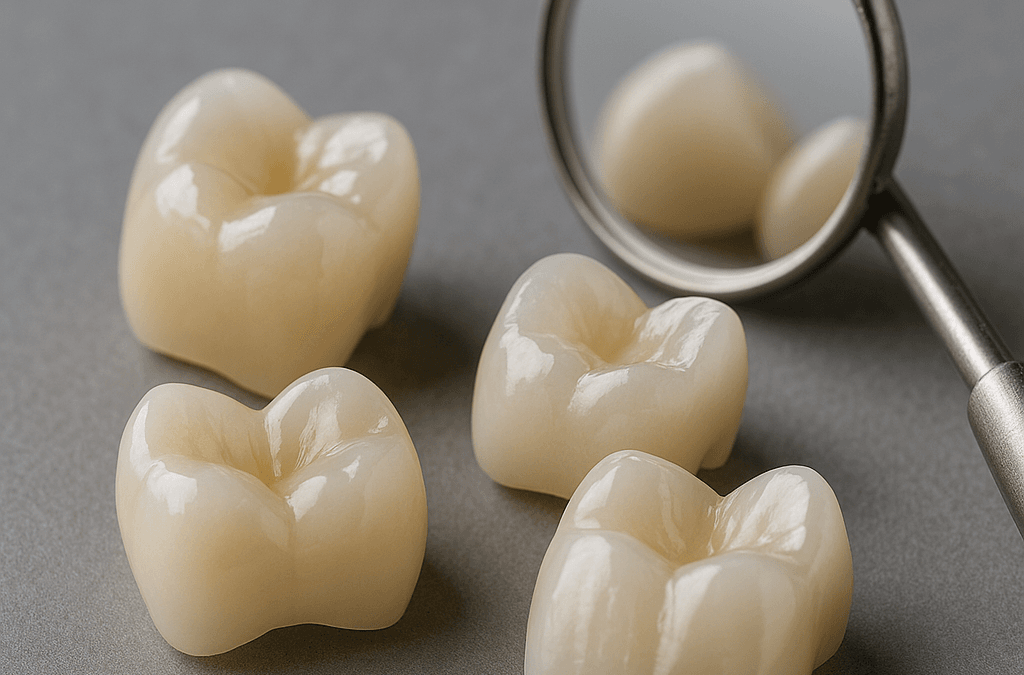
A dental crown is a tooth-shaped cap that fits over a prepared tooth or implant to restore its strength, shape and appearance. Once cemented in place, it becomes the new biting surface and visible part of that tooth, protecting the weakened structure underneath. Crowns can be made from materials like porcelain, ceramic, zirconia, metal or combinations of these, depending on the tooth’s position, bite forces and cosmetic needs.
Crowns are commonly used when a tooth is badly cracked, heavily filled, or has had a root canal, and there is not enough strong enamel left for a simple filling. They also cover dental implants, support bridges, and are often part of full mouth rehabilitations and cosmetic smile makeovers. If a tooth is worn down from grinding or erosion, a crown can rebuild the height of the bite and protect what remains of the natural tooth.
At Dr Chalita le Roux Inc. in Amorosa, Roodepoort, crowns may be recommended after assessing the tooth with an examination and X-rays. For suitable cases, CEREC technology allows same-day ceramic crowns, limiting the time spent with temporary restorations. Crowns are only advised when they are clinically necessary or clearly beneficial – sometimes a more conservative filling, veneer or clear-aligner adjustment is a better option, and that will be discussed openly with you in English or Afrikaans.
How crown materials affect how long they last
The material used for a dental crown plays a major role in how long it is likely to last. Metal crowns, especially gold alloys, have excellent long-term survival and can remain serviceable for decades because they are tough, resist fracture and wear in a forgiving way against opposing teeth. Zirconia crowns are also extremely strong; they are very hard-wearing in normal use, with studies showing high survival rates (around 90% or higher) over many years. These stronger options are often chosen for back teeth where biting forces are highest.
Porcelain-fused-to-metal (PFM) crowns combine a metal core with a tooth-coloured porcelain outer layer. The metal substructure gives support, but the porcelain can chip or wear over time, which is usually the limiting factor. All-ceramic and porcelain crowns (including lithium disilicate) look very natural and are widely used for front teeth and cosmetic cases, but they may have a slightly shorter average lifespan than metal-based crowns in high-stress areas.
At Dr Chalita le Roux Inc., material choice is based on both function and appearance. CEREC same-day crowns are typically high-strength ceramics designed to balance durability with aesthetics. For each tooth, Dr Chalita le Roux, BChD cum laude (UP 2020), HPCSA DP 0118702, SAAAD member, will explain the pros and cons of the available materials and how they may affect the expected lifespan of your crown.
| Crown material | Typical durability | Appearance | Often used for |
|---|---|---|---|
| Gold / full metal | Very hard-wearing; often 20+ years | Metallic (not tooth-coloured) | Back teeth under heavy load |
| Zirconia | Very strong; high survival over many years | Tooth-coloured | Back teeth needing strength and a natural look |
| Porcelain-fused-to-metal | Good, around 10 years or more; porcelain can chip | Tooth-coloured over a metal core | Front or back teeth |
| All-ceramic / porcelain (e.g. lithium disilicate) | Good; very natural, may wear sooner under a heavy bite | Most natural | Front teeth and visible cosmetic cases |
| CEREC same-day ceramic | Comparable medium-term results to lab-made ceramic crowns | Tooth-coloured | Suitable single-visit restorations |
Want a durable crown planned for your tooth? You can book a crown consultation in Roodepoort with Dr Chalita le Roux.
Key factors that influence dental crown lifespan
Beyond the material itself, several practical factors strongly influence how long a dental crown will last. The most important is oral hygiene: if plaque and decay develop at the edge of the crown, the underlying tooth can fail even while the crown looks intact. Brushing twice daily with fluoride toothpaste, cleaning between the teeth, and professional cleanings are essential to protect the crown margins. Gum health also matters – receding gums can expose root surfaces and make it harder to keep the area clean.
Your bite and habits play a big role. Heavy clenching or grinding (bruxism) can chip or fracture crowns, particularly porcelain ones. Chewing ice, very hard sweets or using teeth to open packets puts unnecessary stress on the crown and can shorten its life. Sports-related trauma can damage crowns if you are not wearing a mouthguard. Lifestyle factors like smoking and a high-sugar diet increase overall risk of decay and gum disease, indirectly affecting crown longevity.
The quality of the clinical work also matters: accurate tooth preparation, precise impressions or digital scans, and careful fitting and bonding help create a crown that distributes bite forces evenly and seals properly. At Dr Chalita le Roux Inc. in Roodepoort, crowns are planned with digital imaging and regular reviews during weekday appointments to monitor these risk factors and intervene early if problems arise.
Signs your dental crown may need repair or replacement
Crowns seldom fail overnight – there are usually early warning signs that something is changing. One common sign is new sensitivity to hot, cold or biting pressure around a crowned tooth. This can indicate decay at the margin, a crack in the crown, or irritation of the nerve inside the tooth. Another warning is feeling a rough edge, chip or fracture line with your tongue, or noticing that the crown looks different in the mirror. Porcelain can flake off or the surface can wear, exposing underlying material.
Changes in your bite – such as feeling that the tooth is suddenly “high” or not meeting the opposite tooth correctly – may mean the crown has moved, worn unevenly or is being pushed out of line by shifting teeth. A crown that feels loose, traps food, or shows a dark line or gap at the gum edge can be letting bacteria in, increasing the risk of decay. Persistent gum bleeding or inflammation around a crowned tooth is another sign that the fit or cleaning access is not ideal.
If you notice any of these signs, it is important to have the crown checked during normal practice hours rather than waiting for it to break. At Dr Chalita le Roux Inc., the dentist will examine the crown, take appropriate X-rays and discuss whether a simple adjustment, repair or full replacement is needed. Sometimes only the surrounding tooth or gum needs treatment, but delaying can turn a small issue into a painful fracture.
How to extend the life of your dental crown
There is a lot you can do day-to-day to help your crown reach – and often exceed – its typical 10–15 year lifespan. The basics are good oral hygiene: brush morning and night with fluoride toothpaste, clean carefully around the crown margins, and floss or use interdental aids to remove plaque between teeth. Regular professional cleanings and check-ups, usually every six months, help pick up early decay or loosening before it causes pain or breakage.
Protect your crown from unnecessary forces. Avoid chewing ice, very hard nuts, hard sweets and using your teeth as tools. If you grind or clench your teeth, especially at night, speak to your dentist about a custom night guard to spread forces and protect both crowns and natural teeth. A sports mouthguard is sensible if you play contact sport. Maintaining a balanced diet, limiting frequent sugary snacks and not smoking all support healthier gums and teeth, which in turn protect the tooth under the crown.
At Dr Chalita le Roux Inc. in Amorosa Office Park, Roodepoort, you will receive personalised advice on caring for your crowns, including demonstrations of effective cleaning techniques around CEREC ceramic crowns and implant-supported crowns. The practice provides a detailed statement for you to submit to your medical scheme for reimbursement directly, so you can continue regular maintenance without unexpected administrative surprises.
How Roodepoort dentists help monitor and protect your crowns
Ongoing monitoring by your dentist is one of the most reliable ways to keep crowns functioning well for many years. During routine visits, the dentist checks the fit of each crown, the health of the surrounding gums and the condition of the underlying tooth on X-rays. Small chips, early decay or minor bite changes can often be managed with localised repairs or adjustments, avoiding premature full replacement. Professional cleaning also removes plaque and tartar around the crown edges, where your toothbrush may struggle.
Roodepoort dentists use these appointments to assess broader risk factors, such as signs of grinding, jaw muscle tenderness and wear patterns on other teeth. If bruxism is suspected, a night guard may be recommended to protect crowns and natural teeth. For implant-supported crowns, they check the implant integration and screw or cement stability, as loose components can damage the crown or implant if ignored.
At Dr Chalita le Roux Inc., weekday appointments between 08:00 and 17:00 are available for regular reviews and any crown concerns. CEREC digital technology allows detailed imaging of your bite and quick remaking of ceramic crowns when replacement is genuinely needed. The practice offers free on-site parking at Unit 2, Amorosa Office Park, Corner Doreen and Lawrence Roads, making it easier for Roodepoort patients to attend regular maintenance. Clear, patient-first communication in English or Afrikaans ensures you understand whether watchful waiting, minor adjustment or full crown replacement is the most sensible next step.
How we plan crowns at our Roodepoort practice
At our Roodepoort practice, crown treatment follows three principles. First, we use a digital workflow where it suits the case: CEREC CAD/CAM for same-day ceramic restorations, Digital Smile Design for cosmetic planning, and digital scans instead of conventional putty trays. Second, you receive a written treatment plan before any work begins, in line with HPCSA transparency guidance. Third, as a single-dentist practice, the clinician you consult is the same clinician who carries out every step — there are no hand-offs between practitioners mid-case.
Dr Chalita le Roux is BChD cum laude (University of Pretoria, 2020), HPCSA-registered (DP 0118702), and a member of the South African Academy of Aesthetic Dentistry (SAAAD). The practice is in Amorosa, Roodepoort, with free on-site parking, and welcomes patients from across Roodepoort and the wider West Rand, including Honeydew, Ruimsig, Cresta, Randburg and Krugersdorp.
Considering a dental crown in Roodepoort? You can book a consultation with Dr Chalita le Roux to discuss your options — call 071 884 3204 or message us on WhatsApp, Monday to Friday, 08:00 to 17:00.
What affects the cost of a dental crown
Because every tooth is different, we don’t publish fixed prices. The cost of a crown depends on the condition of the tooth, the material chosen, whether any preparatory treatment (such as a build-up or root canal) is needed, and how many teeth are involved. After your examination you receive a written treatment plan with a clear estimate before any work begins, so there are no surprises. The practice does not bill medical aid directly; we provide a detailed statement you submit to your scheme for reimbursement, and payment is by EFT, card, or cash on the day.
Frequently asked questions
How long do dental crowns usually last?
Most dental crowns last around 10–15 years, with many lasting longer if the tooth and gums stay healthy. Some studies and clinical experience show crowns remaining functional for several decades when they are well made and carefully maintained. Lifespan depends on crown material, bite forces, oral hygiene and habits like grinding or chewing hard objects. Regular check-ups at a Roodepoort dental practice help catch problems early and extend how long your crown serves you.
What types of dental crowns last the longest?
In general, full-metal and gold crowns tend to be the most hard-wearing, often serving well for two decades or more, followed closely by monolithic zirconia, which is very strong. Porcelain-fused-to-metal crowns typically last many years, while all-ceramic options such as lithium disilicate balance strength with a very natural appearance and suit visible teeth well. No single material is best for every tooth – the right choice depends on where the tooth sits, your bite, and how much you value appearance versus maximum strength. Dr Chalita le Roux weighs these factors with you at your consultation in Roodepoort.
How often should a dental crown be replaced?
There is no fixed schedule for replacing crowns. Many last well beyond 10–15 years and are only replaced when there is a clear clinical reason, such as decay under the crown, a fracture, poor fit or cosmetic concerns. Some insurance policies allow replacement after roughly 5–8 years, but that does not mean a sound crown must be changed. Your dentist will assess each crowned tooth at check-ups and advise replacement only when it genuinely improves the health or function of the tooth.
What are the signs that a dental crown is failing?
Warning signs include new sensitivity to hot, cold or biting, a crown that feels loose, rough or chipped, or changes in how your teeth meet when you close. You may notice food trapping around the tooth, a dark line or gap at the gum edge, or persistent gum bleeding and tenderness near the crown. Sometimes pain comes from decay under the crown or a crack in the tooth beneath. If you notice any of these changes, arrange a daytime appointment so your dentist can examine and X-ray the area.
Can a dental crown last a lifetime?
A crown can last a very long time, but a guaranteed lifetime is not something any dentist can promise. On average crowns serve well for around 10 to 15 years, and many continue much longer – sometimes several decades – when the tooth, gums and bite stay healthy. Crowns are usually replaced eventually because of decay at the edge, wear, a fracture, or gum changes rather than a fixed expiry date. Good daily cleaning, protecting against grinding, and regular check-ups at your Roodepoort dentist give a crown the best chance of a long, comfortable life.
How can I make my dental crown last longer?
You can extend the life of your crown by keeping the tooth and gums extremely clean and reducing stress on the crown. Brush twice daily with fluoride toothpaste, clean between teeth, and attend regular professional cleanings and check-ups. Avoid chewing ice, very hard sweets or using your teeth as tools. If you grind or clench, a custom night guard can protect both crowns and natural teeth. Maintaining a balanced, low-sugar diet and not smoking also supports healthier tissues around the crown.
Do dental crowns on molars wear out faster than front tooth crowns?
Molars experience much higher biting and grinding forces than front teeth, so back tooth crowns are under greater mechanical stress. This can lead to faster wear or fracture, especially with porcelain or ceramic materials in heavy biters or grinders. To manage this, dentists often choose stronger materials such as zirconia or metal-based crowns for molars, and more aesthetic ceramics for front teeth where forces are lower. If you have molar crowns and grind your teeth, a night guard can significantly reduce the risk of earlier failure.
Does teeth grinding affect how long dental crowns last?
Yes. Teeth grinding (bruxism) is one of the biggest risk factors for shortening crown lifespan. Constant heavy forces can chip porcelain, wear down ceramic surfaces, loosen cement and even crack the tooth or implant beneath the crown. If your dentist sees signs of grinding, they may recommend a custom night guard to spread forces and protect your crowns and natural teeth. Managing stress, caffeine and some medications can also help reduce grinding intensity for some patients.
What happens during a dental crown replacement?
Replacing a crown usually involves numbing the area, gently removing the old crown and cleaning the tooth underneath. Any decay or damage is treated, and the tooth is reshaped if needed. Your dentist then takes an impression or digital scan to design a new crown that fits your current bite. A temporary crown may be placed while the final one is made, unless same-day technology is used. At the fitting visit, the new crown is checked for fit, bite and appearance, then cemented securely in place.
Will my dental insurance pay to replace an old crown?
Many dental insurance plans contribute towards crown replacement, often after a minimum number of years, such as 5–8, but policies vary widely. Cover usually depends on clinical need (for example, decay or fracture) rather than age alone. In South Africa, you typically submit a detailed practice statement and claim reimbursement directly from your medical scheme. Because benefits differ, it is best to contact your scheme with the treatment codes provided by your Roodepoort dentist before going ahead with replacement.
Book a consultation
To arrange a no-obligation consultation, call 071 884 3204, message us on WhatsApp, or email info@drchalitaleroux.co.za. We reply within two business days, Monday to Friday, 08:00 to 17:00. You can also read more about dental crowns in Roodepoort.
Related reading on our site: Dental crowns in Roodepoort · Dentist in Roodepoort · About Dr Chalita le Roux
This article is general information about dental treatment and is not a diagnosis or a substitute for professional dental advice. Suitability, risks and outcomes vary from person to person and can only be confirmed at a consultation with a registered dentist. Dr Chalita le Roux practises in Roodepoort, Monday to Friday, 08:00–17:00.