
Composite bonding is a minimally invasive way to refine the shape, colour and symmetry of your teeth using tooth-coloured resin. If you live in Kenmare or Krugersdorp, you can reach Dr Chalita le Roux’s practice in Amorosa, Roodepoort with a short drive for a personalised assessment and tailored bonding plan.
- Composite bonding uses tooth-coloured resin to repair chips, close gaps and refine tooth shape.
- It is usually completed in a single visit, especially with digital planning and same-day workflows.
- Suitability depends on your bite, enamel health and cosmetic goals, which we assess in person.
- Costs vary with the number of teeth, complexity and materials, and are explained clearly before treatment.
- Patients from Kenmare reach our Amorosa, Roodepoort practice via the R28 corridor in about 10–15 minutes.
What is composite bonding and how can it improve my smile?
Composite bonding is a cosmetic dental treatment where a tooth-coloured resin is carefully layered onto your teeth to improve their shape, colour and overall appearance. The material bonds directly to the enamel, allowing fine adjustments without removing large amounts of tooth structure. It can be used to repair chips, smooth worn edges, close small gaps and mask discolouration.
Because the resin can be sculpted and polished precisely, composite bonding offers a versatile way to refine your smile while preserving most of your natural tooth. It is often chosen by patients who want cosmetic changes without invasive procedures. At Dr Chalita le Roux Inc, your bonding plan is designed by one dentist, start to finish, so the final result aligns closely with what you discussed during your consultation.
Composite bonding is also reversible in the sense that the underlying tooth structure remains largely intact. Future changes, such as whitening or switching to ceramic veneers, can usually be planned around existing bonding. We discuss all these possibilities at your consultation so you understand how bonding fits into your long-term oral health and cosmetic goals.
Who is a good candidate for composite bonding in Kenmare, Roodepoort?
Composite bonding suits many patients who have healthy teeth and gums but feel self-conscious about smaller aesthetic issues. Typical reasons include chipped or worn front teeth, uneven edges, small spaces between teeth, and localised stains or discolouration that do not respond well to whitening alone. If your bite is stable and you do not grind excessively, bonding can be a practical way to refine your smile.
The right option depends on your individual situation. During your consultation, Dr Chalita le Roux assesses your enamel, gum health, bite and overall facial profile. She will discuss whether composite bonding alone is appropriate or whether it should be combined with other treatments such as whitening or clear aligners to correct alignment before reshaping. Some patients benefit more from ceramic restorations, while others achieve their goals with subtle bonding changes.
If you live in Kenmare or greater Krugersdorp, reaching our practice is straightforward: you travel east along the R28 corridor towards Roodepoort, then turn into Amorosa where our office park is located. This short drive means you can access a personalised, start-to-finish approach with one dentist, without having to travel into central Johannesburg for every appointment.
What happens during a composite bonding appointment?
Most composite bonding treatments are completed in a single visit, especially when combined with digital planning. We start with a consultation, photographs and, where appropriate, digital scans. These records help us analyse tooth proportions, symmetry and how your teeth fit together. You and Dr le Roux discuss your goals in detail so the planned changes suit your face and personality, not just your teeth.
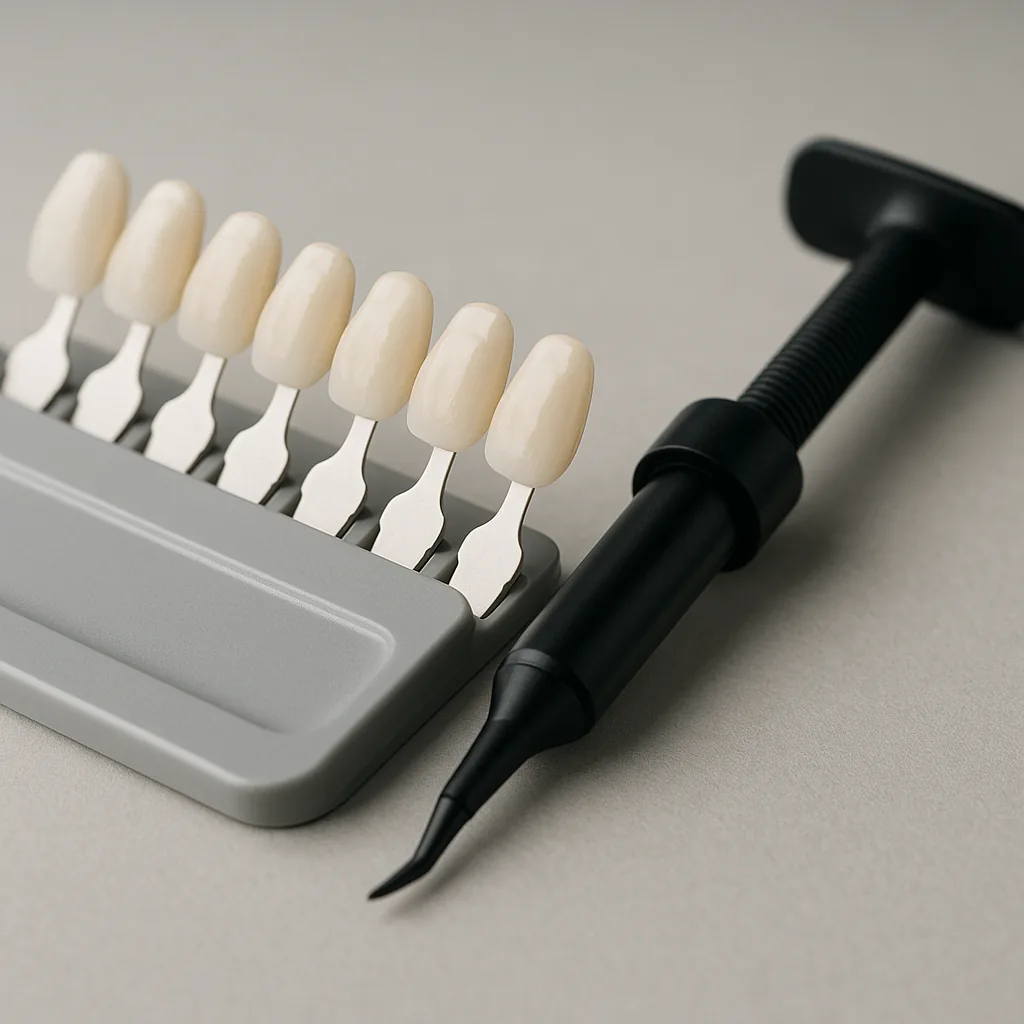
On the day of bonding, the tooth surface is cleaned and lightly prepared to help the resin bond effectively. A shade is selected to match or enhance your natural tooth colour, often after whitening if that has been part of your plan. The composite is then applied in small layers, shaped carefully and set with a curing light. Once the overall form is achieved, the teeth are polished to a smooth, natural-looking finish.
Our digital workflow, including CEREC CAD/CAM and digital scanning, supports this process by allowing accurate planning and, where clinically suitable, same-day fabrication of complementary restorations such as crowns or veneers for neighbouring teeth. This means many patients can have a coordinated smile makeover with fewer visits and less time away from work or family commitments.
What does composite bonding cost and what affects the price?
Patients often ask about the cost of composite bonding. Instead of a fixed fee, the price is influenced by several clinical factors. The main drivers include how many teeth are treated, the complexity of reshaping, the quality and type of composite material used, and whether digital planning or additional procedures such as whitening are involved. More detailed aesthetic work on multiple teeth generally falls into a higher investment tier than a small repair on a single tooth.
As a guide, conservative bonding on one or two teeth to repair chips or small defects is typically in the lower to moderate investment range ($–$$). More extensive cosmetic bonding across several front teeth, with careful recontouring and colour layering, tends to sit in the moderate to higher tier ($$–$$$) because it requires more chairside time and fine detail work. When bonding is combined with ceramic restorations or clear aligner therapy, the overall plan moves towards the higher tier due to the added technology and materials.
We believe cost discussions are most helpful when they are personalised. At Dr Chalita le Roux Inc, an exact, individual estimate is given after the consultation, in writing, before any treatment starts.
How do I get to your Roodepoort practice from Kenmare and what makes the visit convenient?
For patients living in Kenmare, near Krugersdorp, getting to our practice is simple. You travel east towards Roodepoort along the R28, then follow the turn-off into Amorosa. Unit 2, Amorosa Office Park is a short drive from Kenmare, typically around 10–15 minutes depending on traffic, which makes it practical for before-work or midweek appointments without a long commute.
Convenience is not only about distance, but also about how many visits you need. Because our workflow uses digital scanning and CEREC CAD/CAM technology, many suitable crowns and veneers can be completed in a single visit where clinically appropriate. This can be combined with composite bonding on adjacent teeth, reducing the need for repeated impressions, temporary restorations or multiple trips.
You see one dentist, Dr Chalita le Roux, from initial assessment through to the final polish, which helps keep your treatment plan coherent and tailored to you. Book 24 hours a day on WhatsApp. We treat patients Monday to Friday, 08:00 to 17:00, and your appointment times are chosen to fit as smoothly as possible into your routine when you are coming from Kenmare or other nearby suburbs.
What does a composite bonding visit from Kenmare to Roodepoort involve?
| Aspect of the visit | Composite bonding appointment |
|---|---|
| Travel from Kenmare | Drive east along the R28 towards Roodepoort, then turn into Amorosa to reach Amorosa Office Park. |
| Time commitment | Most bonding treatments are planned and completed in a single visit, especially for straightforward cases. |
| Initial assessment | Consultation with clinical examination, photos and, where helpful, digital scans to assess suitability and plan your smile. |
| Treatment steps | Tooth cleaning and preparation, shade selection, layering of composite resin, shaping, curing and final polishing. |
| Use of digital technology | Digital imaging and CEREC CAD/CAM can support same-day crowns or veneers where clinically suitable alongside bonding. |
| Follow-up care | Review of the bite, refinement if needed, and guidance on maintenance, whitening timing and future cosmetic options such as clear aligners. |
Related pages
Porcelain Veneers · Smile Makeovers · Cosmetic Dentistry · All treatments & service areas
Frequently asked questions
Is composite bonding suitable if my front teeth are chipped or uneven?
Composite bonding is often well suited to small chips, worn edges and mild unevenness in the front teeth. The resin can be shaped to rebuild missing corners, smooth rough surfaces and create more symmetrical edges. However, we need to assess your bite, enamel thickness and any habits such as grinding in person. This way we can advise whether bonding alone is appropriate or if you would benefit more from ceramic restorations or other supportive treatments.
How long does composite bonding usually last?
Composite bonding is designed to be durable, but like any dental material it is subject to wear and staining over time. Longevity depends on your bite, dietary habits, oral hygiene and whether you protect your teeth if you grind. Many patients enjoy their bonding for several years before needing minor touch-ups or polishing. Because the underlying tooth structure is preserved, maintenance is often straightforward. We will discuss realistic expectations for your situation during your consultation.
Will composite bonding look natural next to my other teeth?
The goal of composite bonding is a natural, harmonious appearance. We carefully select the resin shade to match your existing teeth or to complement a planned whitening result. Layers of composite can be used to mimic the translucency and texture of natural enamel. The final polish aims to blend the bonded areas seamlessly with the surrounding tooth. During your appointment, we review the result together and make fine adjustments so you feel comfortable with your new smile.
Do I need whitening before I have composite bonding done?
Whitening is not compulsory, but it can be helpful if you would like a lighter overall tooth shade. Composite bonding cannot be whitened after placement, so we usually recommend completing whitening first if you plan to brighten your smile. The bonding material is then chosen to match your new shade. Some patients are happy with their current colour and focus purely on shape and symmetry. We assess this in person and help you decide on the sequence that fits your goals.
Is composite bonding painful and will I need anaesthetic?
Most composite bonding involves minimal adjustment to the tooth surface and is generally well tolerated. For small repairs or edge refinements, many patients are comfortable without anaesthetic. For more extensive reshaping, we may use local anaesthetic to help make sure you feel relaxed while we work. Your comfort is monitored throughout, and we explain each step before we begin. At your consultation, we will discuss what to expect based on the extent of bonding planned.
How do I care for my teeth after composite bonding?
After composite bonding, you should maintain thorough brushing and flossing, attend regular check-ups and be mindful of habits that can stress the bonded areas. It is advisable to avoid biting directly on hard objects such as ice or pens with bonded front teeth. Limiting very dark or strongly coloured foods and drinks can help reduce staining over time. If you grind or clench, we may recommend a protective night guard. We provide tailored aftercare advice based on your treatment and lifestyle.
Can composite bonding be combined with clear aligners or other cosmetic treatments?
Yes, composite bonding often forms part of a broader cosmetic plan. Clear aligners can be used first to straighten teeth and improve the bite, creating a more stable foundation for bonding. Bonding may then be applied to refine edges, close small residual gaps or adjust tooth proportions. In other cases, bonding is coordinated with whitening or same-day ceramic restorations using our CEREC CAD/CAM system. We map out the sequence that suits your teeth and goals during your consultation.
How do I book an appointment for composite bonding if I live in Kenmare?
If you are in Kenmare, you can book an appointment by contacting our Roodepoort practice and arranging a time that fits your schedule. Book 24 hours a day on WhatsApp. We treat patients Monday to Friday, 08:00 to 17:00, so you can plan your visit around work or family commitments. When you come in, Dr Chalita le Roux will examine your teeth, discuss your concerns and provide a personalised treatment and cost outline before any bonding is started.
Book a consultation
To discuss composite bonding kenmare with Dr Chalita le Roux, WhatsApp us on 083 710 9131, call 071 884 3204, or send us a message. We are in Amorosa, Roodepoort, open Monday to Friday, 08:00 to 17:00, with free on-site parking.
Written and clinically reviewed by Dr Chalita le Roux, BChD cum laude (University of Pretoria, 2020), HPCSA DP 0118702, member of the South African Academy of Aesthetic Dentistry. In private practice in Roodepoort since 2022.
This page is general information, not a diagnosis or treatment plan. What is right for your teeth is decided at a consultation with a registered dental practitioner.