A dental crown procedure restores a tooth that is cracked, worn, heavily filled, or weakened after root canal treatment — capping it so it looks and works like a natural tooth again. If you have been told you need a crown, this guide explains, in plain terms, what the treatment involves, what happens at each visit, how we plan it at our Roodepoort practice, and the questions worth asking before you agree to anything. Everything here is general information — your own treatment is always planned face to face at a consultation with Dr Chalita le Roux.
What is a dental crown procedure?
A dental crown procedure is a restorative treatment used to cover and protect a tooth that is badly damaged, weakened, worn down, or heavily restored. The crown acts like a protective cap that fits over the remaining tooth structure, helping it function again for biting and chewing while also improving appearance when needed.
In practice, the tooth is first examined to confirm that a crown is the right option. The dentist then prepares the tooth so the crown can fit securely, and takes a digital scan or impression to capture the exact shape. At Dr Chalita le Roux Inc. in Roodepoort, CEREC same-day crowns are available, which means many crowns can be designed, made and fitted in a single visit when the case is suitable. This can reduce the need for a temporary crown and a second appointment.
Crowns may be made from ceramic or porcelain-based materials, depending on where the tooth is located and what it needs to do. The aim is not just to make the tooth look natural, but to restore strength and support in a way that suits the bite and the rest of the mouth.
When do you need a dental crown?
A dental crown is usually recommended when a tooth has lost too much structure for a filling to hold up properly. Common reasons include a large cavity, a cracked or fractured tooth, a tooth that has had root canal treatment, or a tooth that is worn down from grinding or long-term wear. Crowns are also used when an old restoration is failing and the tooth needs stronger coverage.
Your dentist may suggest a crown if the tooth is still worth saving but needs more support than a filling, inlay or onlay can provide. In front teeth, a crown may also be used when the shape or colour of the tooth has been affected and other cosmetic options are not appropriate. The key question is whether enough healthy tooth remains to support a crown and whether the tooth can be kept stable for the long term.
At Dr Chalita le Roux Inc. in Roodepoort, the decision is based on examination, X-rays and your symptoms. A crown is not the right answer for every damaged tooth, so the treatment plan should be based on what is clinically needed rather than what is simply possible.
What types of dental crowns are available?
The main crown options are usually ceramic, porcelain-based crowns, metal-based crowns, and layered combinations of materials. In modern general and cosmetic dentistry, ceramic and porcelain-based crowns are often chosen because they can look natural and blend well with nearby teeth. They are especially useful where appearance matters, but they also need to be matched carefully to the bite and the amount of chewing force the tooth must handle.
CEREC same-day crowns are a major option in this practice. These are digitally designed and milled on-site, which means many cases can be completed without sending the crown to an outside laboratory. That can be a practical choice for patients who want fewer visits and a faster turnaround, provided the tooth and bite are suitable for same-day treatment.
Some teeth need stronger coverage because they are under heavy load or already have limited tooth structure. In those cases, the material choice should be based on durability, available space, cosmetic needs and the location of the tooth. At Dr Chalita le Roux Inc. in Roodepoort, the recommendation is made after a proper assessment rather than by using one material for everyone.
Step-by-step: how the dental crown procedure works
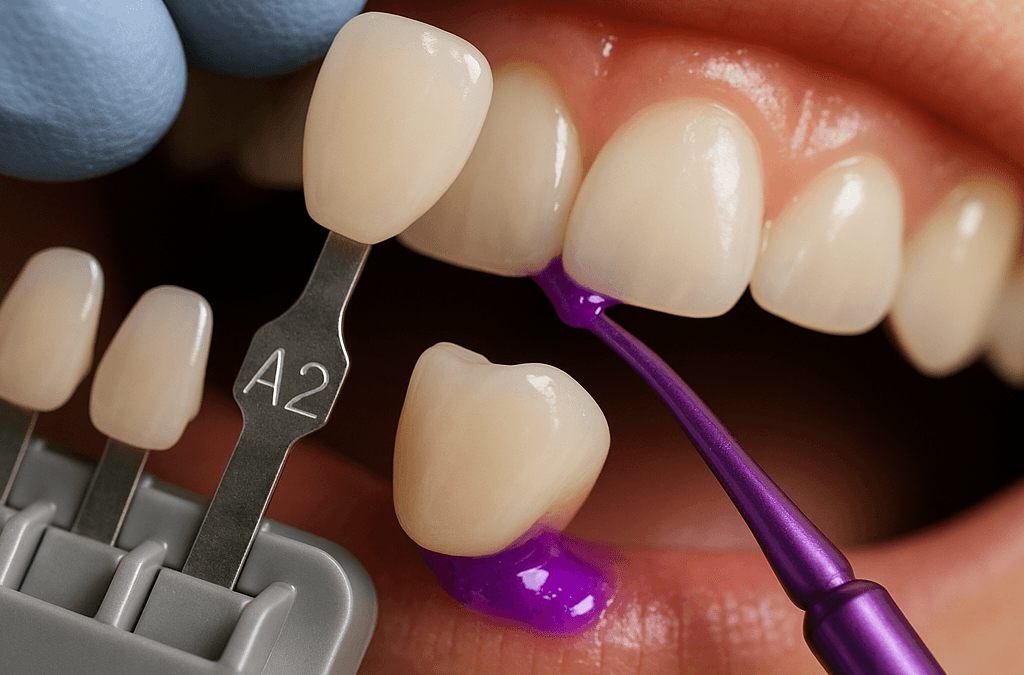
The dental crown procedure usually starts with an examination, X-rays if needed, and a discussion of your symptoms and goals. Once the tooth has been assessed and a crown is confirmed as the right treatment, the area is numbed with local anaesthetic so the procedure is comfortable. The dentist then prepares the tooth by removing decay, weak areas and a small amount of outer tooth structure so the crown can fit correctly.
Next, the tooth is scanned digitally or impressed, depending on the crown system being used. With CEREC same-day crowns, the digital scan is used to design the crown on a computer, after which the crown is milled on-site. The dentist checks the fit, shape and bite carefully before bonding the crown in place. If a laboratory-made crown is planned, a temporary crown is usually placed while the final crown is made.
Before the appointment ends, the bite is checked again and you are given instructions on what to expect once the numbness wears off. At Dr Chalita le Roux Inc. in Roodepoort, the focus is on function, fit and a realistic result that suits the tooth’s condition.
If you would like your own tooth assessed, you can book a crown consultation in Roodepoort with Dr Chalita le Roux.
Benefits and results of a dental crown procedure
The main benefit of a dental crown is that it protects a weakened tooth and helps restore normal function. A crown can make it possible to chew more comfortably, reduce the risk of further fracture, and improve the stability of a tooth that would otherwise be at risk. When a tooth has visible damage or an old restoration has failed, a crown can also improve appearance by covering the affected area with a material chosen to blend with nearby teeth.
Another practical benefit is that a crown can save a tooth that might otherwise need more extensive treatment or removal. For patients who have had root canal treatment, a crown often provides the extra coverage needed to protect the tooth from cracking. In cosmetic cases, crowns can also be used to reshape or refine a tooth where other treatment options are not suitable.
At Dr Chalita le Roux Inc. in Roodepoort, the result is planned around the individual tooth and bite rather than a one-size-fits-all look. The goal is a crown that functions properly, looks natural in context, and supports long-term oral health when paired with good home care and regular check-ups.
Recovery, aftercare and how long crowns last
After a crown procedure, it is normal to have some sensitivity or mild tenderness for a short period, especially once the anaesthetic wears off. Most people can return to normal daily activities the same day, but it is sensible to be careful with chewing until the bite feels settled. If a temporary crown was placed, you will need to avoid sticky or very hard foods on that side and follow the instructions given by the dentist.
Good aftercare includes brushing twice a day, cleaning between the teeth, and avoiding habits such as biting ice, opening packets with teeth or grinding the crown. If you clench or grind your teeth, a night guard may be recommended to reduce wear and protect both the crown and the natural teeth. Regular dental check-ups help the dentist monitor the crown margin, bite and surrounding gums.
How long a crown lasts depends on the tooth, the material, your bite, oral hygiene and how well the crown is maintained. Many crowns last for years, and some last much longer with proper care. At Dr Chalita le Roux Inc. in Roodepoort, advice is given based on your specific crown and risk factors, rather than using a fixed lifespan for everyone.
Potential risks, complications and how we reduce them
Like any dental procedure, crown treatment has possible risks. These can include temporary sensitivity, gum irritation, a bite that feels high, the crown loosening over time, or the need for further treatment if decay develops at the edge of the crown. In some cases, a tooth that looked suitable for a crown may later need additional work if the remaining tooth structure is weaker than expected.
There is also a small risk that the crown will not feel completely comfortable at first and needs adjustment. If the tooth is badly cracked or the pulp is inflamed, the tooth may still require root canal treatment or, in some cases, may not be suitable for a crown at all. A crown can protect a tooth, but it cannot fix every problem.
Risks are reduced by doing proper examination, X-rays where needed, careful tooth preparation, accurate digital scanning or impressions, and checking the bite before final cementation. At Dr Chalita le Roux Inc. in Roodepoort, the treatment plan is based on the condition of the tooth, so patients are not pushed into crown treatment when another option is more appropriate.
Are there alternatives to a dental crown?
Yes, there are alternatives in some cases, but they depend on how much tooth structure remains and what the tooth needs to do. Smaller areas of damage may be treated with a filling, while more moderate damage may sometimes be managed with an inlay or onlay instead of a full crown. If the issue is mainly cosmetic and the tooth is otherwise healthy, veneers may be considered for selected front teeth. If the tooth cannot be saved predictably, extraction and replacement options may be discussed.
Not every tooth that is damaged needs a crown, and not every tooth is suitable for one. The decision depends on the depth of decay, presence of cracks, bite forces, root canal status and the amount of healthy tooth left. A crown is usually chosen when simpler restorations are unlikely to last.
At Dr Chalita le Roux Inc. in Roodepoort, the aim is to choose the least invasive option that still gives a sound clinical result. That may be a crown, but it may also be another restorative treatment if the tooth does not need full coverage.
How we plan crowns at our Roodepoort practice
At our Roodepoort practice, crown treatment follows three principles. First, we use a digital workflow where it suits the case: CEREC CAD/CAM for same-day ceramic restorations, Digital Smile Design for cosmetic planning, and digital scans instead of conventional putty trays. Second, you receive a written treatment plan before any work begins, in line with HPCSA transparency guidance. Third, as a single-dentist practice, the clinician you consult is the same clinician who carries out every step — there are no hand-offs between practitioners mid-case.
Dr Chalita le Roux is BChD cum laude (University of Pretoria, 2020), HPCSA-registered (DP 0118702), and a member of the South African Academy of Aesthetic Dentistry (SAAAD). The practice is in Amorosa, Roodepoort, with free on-site parking, and welcomes patients from across Roodepoort and the wider West Rand, including Honeydew, Ruimsig, Cresta, Randburg and Krugersdorp.
Considering a dental crown in Roodepoort? You can book a consultation with Dr Chalita le Roux to discuss your options — call 071 884 3204 or message us on WhatsApp, Monday to Friday, 08:00 to 17:00.
What affects the cost of a dental crown
Because every tooth is different, we don’t publish fixed prices. The cost of a crown depends on the condition of the tooth, the material chosen, whether any preparatory treatment (such as a build-up or root canal) is needed, and how many teeth are involved. After your examination you receive a written treatment plan with a clear estimate before any work begins, so there are no surprises. The practice does not bill medical aid directly; we provide a detailed statement you submit to your scheme for reimbursement, and payment is by EFT, card, or cash on the day.
Frequently asked questions
What is a dental crown procedure?
A dental crown procedure is treatment that covers a damaged or weakened tooth with a custom-made cap. The crown helps restore strength, shape and function while protecting the remaining tooth structure. At Dr Chalita le Roux Inc. in Roodepoort, crowns may be made with CEREC same-day technology in suitable cases, which can shorten the treatment process. The dentist first assesses whether a crown is the right option, then prepares the tooth, takes a scan or impression, and fits the finished crown once it matches the bite properly.
Why might my dentist recommend a dental crown?
A dentist may recommend a crown when a tooth is too damaged for a normal filling to hold up well. Common reasons include large decay, cracks, a tooth after root canal treatment, heavy wear, or a failing old restoration. A crown can protect the tooth, restore chewing function and help prevent further breakage. In some cases, it may also improve the appearance of a visible tooth. The decision should be based on examination and X-rays, because not every damaged tooth needs a crown.
What happens during a dental crown appointment in Roodepoort?
During a crown appointment, the tooth is examined, and X-rays or scans may be taken to check whether a crown is suitable. The tooth is then numbed, shaped and prepared so the crown can fit securely. At Dr Chalita le Roux Inc. in Roodepoort, many suitable cases can use CEREC same-day crowns, where the tooth is digitally scanned, the crown is designed on-site, and it may be fitted on the same day. The bite is checked carefully before you leave.
Does a dental crown procedure hurt?
The procedure is usually carried out under local anaesthetic, so you should not feel pain during the tooth preparation itself. You may feel pressure or vibration, but not sharp pain. After the appointment, it is common to have some tenderness or sensitivity for a short time while the tooth settles. If the discomfort is more than expected, or if the bite feels high, the crown may need adjustment. Your dentist can explain what is normal for your specific case.
How long does a dental crown procedure take from start to finish?
The time depends on the type of crown and the condition of the tooth. With CEREC same-day crowns, many cases can be prepared, designed, made and fitted in a single visit. If a laboratory-made crown is needed, the treatment usually takes more than one appointment because the crown must be manufactured before final fitting. The dentist will first confirm whether the tooth needs extra steps such as build-up work or root canal-related treatment, which can also affect timing.
How should I prepare for my dental crown procedure?
Before your appointment, it helps to keep the tooth clean and follow any instructions given by the practice. Eat normally unless you have been told otherwise, and tell the dentist about medical conditions, allergies, medications and any previous dental problems. If you are anxious, let us know beforehand and we will talk through ways to keep you comfortable during treatment. Bring any relevant records if you are transferring care, and plan for a normal recovery period after the appointment, especially if local anaesthetic is used.
How long will my dental crown last and how do I care for it?
How long a crown lasts depends on the tooth, the material, your bite and how well you care for it. Many crowns last for years, and some last much longer. To help it last, brush twice daily, clean between the teeth, attend regular check-ups and avoid habits like biting hard objects or opening things with your teeth. If you grind at night, a protective night guard may be advised. A crown still needs the same general oral hygiene as a natural tooth.
What are the possible risks or complications of a crown?
Possible risks include temporary sensitivity, gum irritation, a bite that feels uneven, loosening over time, or decay developing at the edge of the crown. In some cases, the tooth may later need further treatment if the underlying structure is weaker than expected. A crown is not suitable for every tooth, especially if the tooth is badly cracked or too damaged. Careful examination, correct preparation and bite checks all help reduce these risks.
Are there alternatives to getting a dental crown?
Yes, depending on the tooth. Smaller problems may be treated with a filling, while inlays or onlays may be suitable when the damage is more moderate. Veneers can sometimes be used for selected front teeth when the main concern is appearance rather than strength. If the tooth cannot be restored predictably, removal and replacement options may be discussed. Your dentist should explain why a crown is recommended rather than another treatment.
What happens if I delay or avoid having a recommended dental crown?
Delaying a recommended crown can allow a weakened tooth to crack further, become more sensitive, or develop deeper decay. In some cases, the tooth that could have been saved with a crown may later need root canal treatment or even extraction. The longer the tooth is left untreated, the fewer conservative options may remain. If you are unsure, it is better to have the tooth reassessed so you can understand the likely risks of waiting.
Book a consultation
To arrange a no-obligation consultation, call 071 884 3204, message us on WhatsApp, or email info@drchalitaleroux.co.za. We reply within two business days, Monday to Friday, 08:00 to 17:00. You can also read more about dental crowns in Roodepoort.
Related reading on our site: Dental crowns in Roodepoort · Dentist in Roodepoort · About Dr Chalita le Roux
This article is general information about dental treatment and is not a diagnosis or a substitute for professional dental advice. Suitability, risks and outcomes vary from person to person and can only be confirmed at a consultation with a registered dentist. Dr Chalita le Roux practises in Roodepoort, Monday to Friday, 08:00–17:00.